
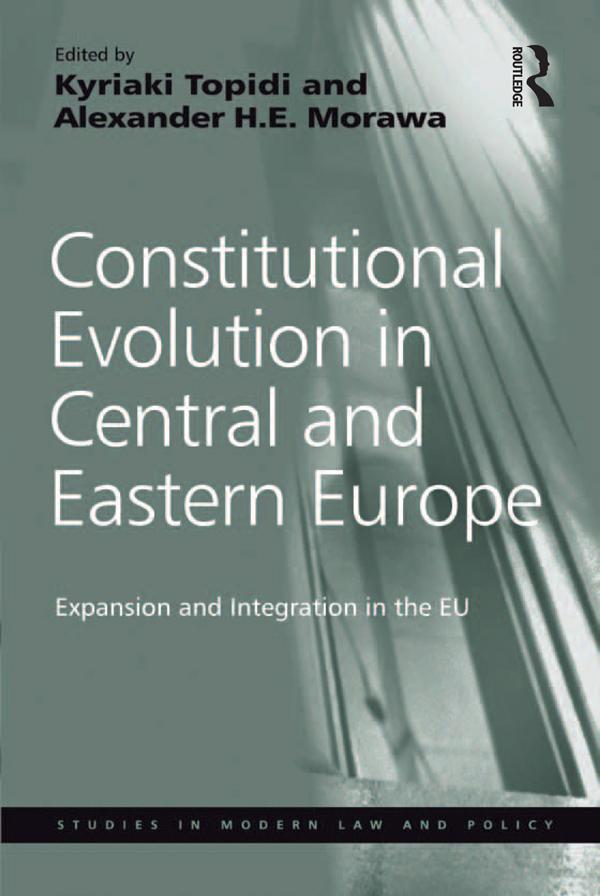
This book examines EU enlargement by studying how domestic constitutional evolution in the new member states contributes to European integration. In contrast to the usual top-down analytical pattern, it reverses the paradigm by looking at constitutional developments and dynamics from the bottom-up, studying how domestic constitutional evolution contributes to European integration. The authors analyze constitutional trends from the perspective of 'new Member States' as policy-makers and not strictly as policy-takers. The issue of conditionality is also explored in a discussion of the extent to which pre-2004 and 2007 conditionality has had lasting effects at the level of constitutionalization of different areas and norms and if so, of what kind. The exploration of Europeanization effects in recent Member States substantiates and demonstrates how enlargement has been an important driving-force for the effective export of EU legal rules in this region. The book utilizes a comparative approach to highlight the merits and obstacles created by the growing diversity in the constitutional rules and patterns of the new Member States. It also contains a section that places the CEE constitutionalizing map in a broader comparative European and global context, establishing links with similar transitional regimes in the continent and elsewhere.
Betal nemt med kort, Klarna, Apple Pay eller Google Pay. Ikke tilfreds? Du har altid 14 dages fortrydelsesret. Læs mere i vores vilkår. Har du spørgsmål, så send os en mail på hello@memmo.org.
Memmo gør det nemmere at studere – uanset hvor du er i verden. Hos os samler du dine kursusbøger og smarte studieværktøjer ét sted: resuméer, quizzer, podcasts og flashcards. Og så er der Ted, din studieven, der svarer på alt, du undrer dig over. Over 50 000 studerende studerer allerede her – bygget til at hjælpe dig med at lære hurtigere og stresse mindre.
Du kan måske også lide
Køb bogen0