
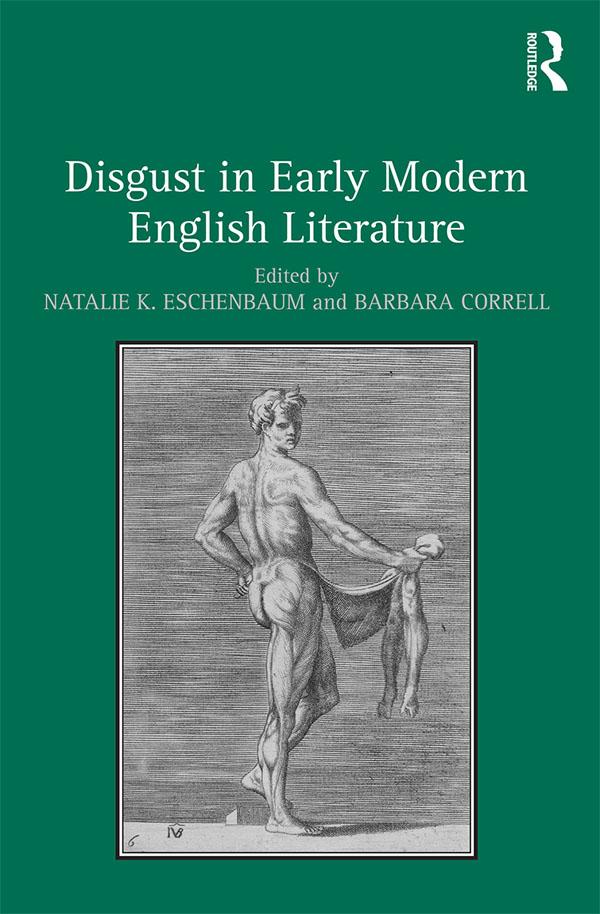
What is the role of disgust or revulsion in early modern English literature? How did early modern English subjects experience revulsion and how did writers represent it in poetry, plays, and prose? What does it mean when literature instructs, delights, and disgusts? This collection of essays looks at the treatment of disgust in texts by Spenser, Shakespeare, Donne, Jonson, Herrick, and others to demonstrate how disgust, perhaps more than other affects, gives us a more complex understanding of early modern culture. Dealing with descriptions of coagulated eye drainage, stinky leeks, and blood-filled fleas, among other sensational things, the essays focus on three kinds of disgusting encounters: sexual, cultural, and textual. Early modern English writers used disgust to explore sexual mores, describe encounters with foreign cultures, and manipulate their readers' responses. The essays in this collection show how writers deployed disgust to draw, and sometimes to upset, the boundaries that had previously defined acceptable and unacceptable behaviors, people, and literatures. Together they present the compelling argument that a critical understanding of early modern cultural perspectives requires careful attention to disgust.
Betal nemt med kort, Klarna, Apple Pay eller Google Pay. Ikke tilfreds? Du har altid 14 dages fortrydelsesret. Læs mere i vores vilkår. Har du spørgsmål, så send os en mail på hello@memmo.org.
Memmo gør det nemmere at studere – uanset hvor du er i verden. Hos os samler du dine kursusbøger og smarte studieværktøjer ét sted: resuméer, quizzer, podcasts og flashcards. Og så er der Ted, din studieven, der svarer på alt, du undrer dig over. Over 50 000 studerende studerer allerede her – bygget til at hjælpe dig med at lære hurtigere og stresse mindre.
Du kan måske også lide
Køb bogen0