
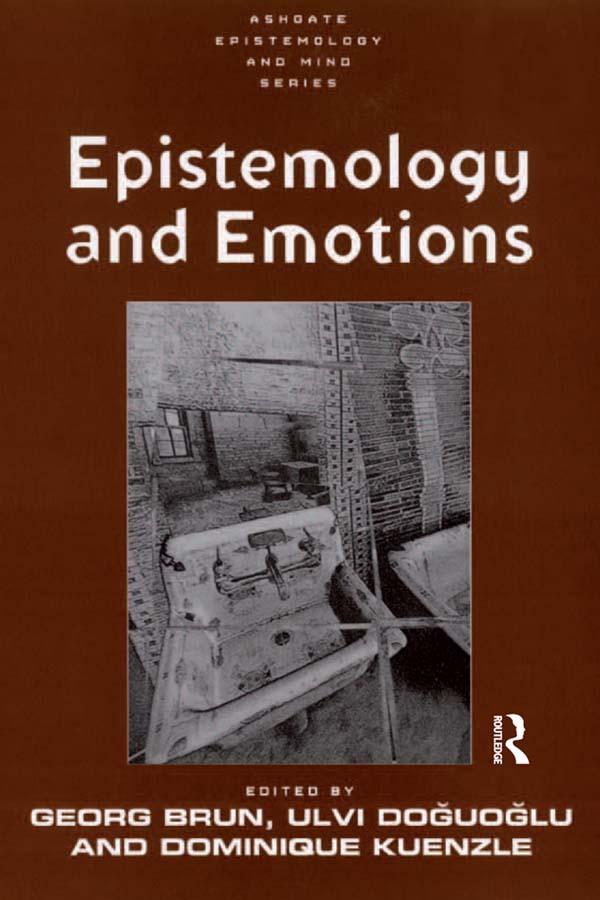
Undoubtedly, emotions sometimes thwart our epistemic endeavours. But do they also contribute to epistemic success? The thesis that emotions 'skew the epistemic landscape', as Peter Goldie puts it in this volume, has long been discussed in epistemology. Recently, however, philosophers have called for a systematic reassessment of the epistemic relevance of emotions. The resulting debate at the interface between epistemology, theory of emotions and cognitive science examines emotions in a wide range of functions. These include motivating inquiry, establishing relevance, as well as providing access to facts, beliefs and non-propositional aspects of knowledge. This volume is the first collection focusing on the claim that we cannot but account for emotions if we are to understand the processes and evaluations related to empirical knowledge. All essays are specifically written for this collection by leading researchers in this relatively new and developing field, bringing together work from backgrounds such as pragmatism and scepticism, cognitive theories of emotions and cognitive science, Cartesian epistemology and virtue epistemology.
Betal nemt med kort, Klarna, Apple Pay eller Google Pay. Ikke tilfreds? Du har altid 14 dages fortrydelsesret. Læs mere i vores vilkår. Har du spørgsmål, så send os en mail på hello@memmo.org.
Memmo gør det nemmere at studere – uanset hvor du er i verden. Hos os samler du dine kursusbøger og smarte studieværktøjer ét sted: resuméer, quizzer, podcasts og flashcards. Og så er der Ted, din studieven, der svarer på alt, du undrer dig over. Over 50 000 studerende studerer allerede her – bygget til at hjælpe dig med at lære hurtigere og stresse mindre.
Du kan måske også lide
Køb bogen0