
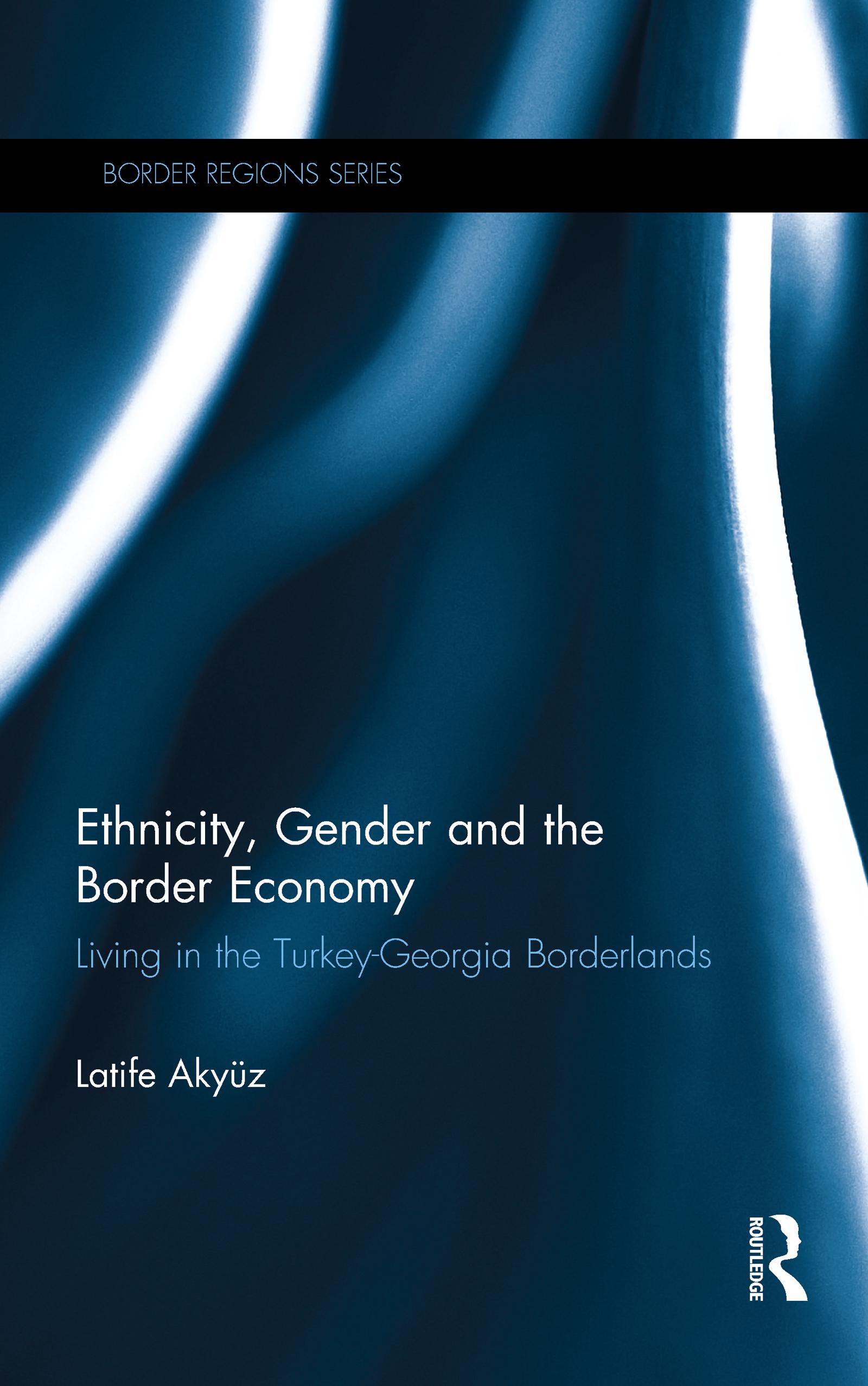
For whom and why are borders drawn? What are the symbolic projections of these physical realities? And what are the symbolic projections of these physical realities? Constituted by experience and memory, borders shape a "border image" in the minds and social memory of people beyond the lines of the state. In the case of the Turkey-Georgia border, the image of the border has often been constructed as an economic reality that creates "conditional permeabilities" rather than political emphases. This book puts forward the argument that participation in this economic life reshapes the relationship between the ethnic groups who live in the borderland as well as gender relations. By drawing on detailed ethnographic research at the Turkey-Georgia border, life at the border is explored in terms of family relations, work life, and intra- and inter-ethnic group relations. Using an intersectional approach, the book charts the perceptions and representations of how different ethnic and gendered groups experience interactions among themselves, with each other, and with the changing economic context.
This book offers a rich, empirically based account of the intersectional and multidimensional forms of economic activity in border regions. It will be of interest to students, researchers, and policy makers alike working in geography, economics, ethnic studies, gender studies, international relations, and political studies.
Betal nemt med kort, Klarna, Apple Pay eller Google Pay. Ikke tilfreds? Du har altid 14 dages fortrydelsesret. Læs mere i vores vilkår. Har du spørgsmål, så send os en mail på hello@memmo.org.
Memmo gør det nemmere at studere – uanset hvor du er i verden. Hos os samler du dine kursusbøger og smarte studieværktøjer ét sted: resuméer, quizzer, podcasts og flashcards. Og så er der Ted, din studieven, der svarer på alt, du undrer dig over. Over 50 000 studerende studerer allerede her – bygget til at hjælpe dig med at lære hurtigere og stresse mindre.