
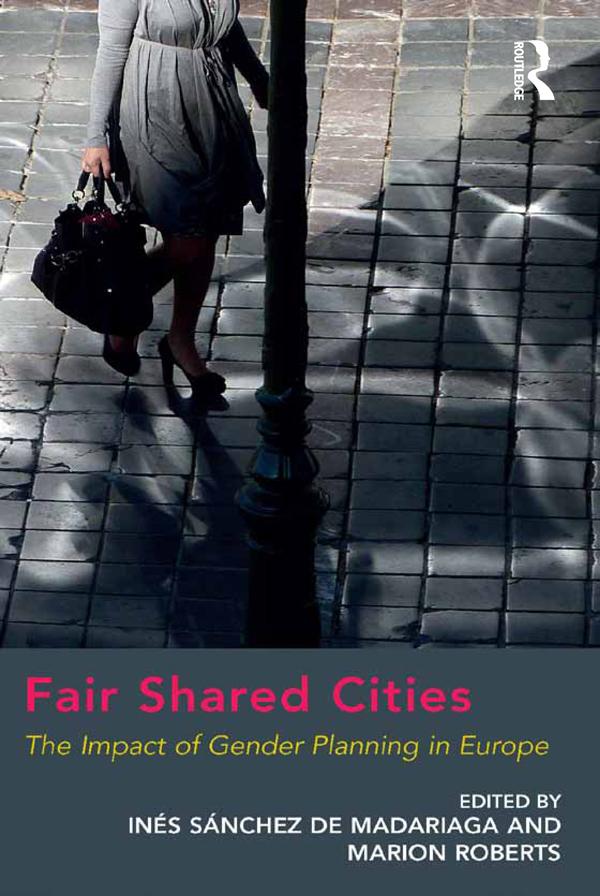
Bringing together a diverse team of leading scholars and professionals, this book offers a variety of insights into ongoing gender mainstreaming policies in Europe with a focus on urban/spatial planning. Gender mainstreaming was first legislated for in the European Union with the Treaty of Amsterdam in 1999 and, although many interesting developments have occurred throughout the decade that followed, there is still much to do in terms of policy, knowledge production, dissemination and education. This work contributes to all three objectives, by advancing the state of knowledge, as well as providing educational and professional tools in the field of gender sensitive planning in Europe. The volume begins by explaining the concept of gender mainstreaming in relation to its origins in the 'second wave' of the women's movement and critiques of planning, architecture, transport planning and other built environment disciplines. It then provides a brief history of how gender mainstreaming was incorporated into European law, before focussing on the theoretical issues and questions that surround the concept of gender mainstreaming as they relate to urban space and the planning of cities and regions, including a discussion of the persistence of inequalities between the sexes in their access to urban space and services. In particular, the division between waged and unwaged work and its impact on the social construction of gender and of the physical built environment is considered. The differences between definitions of feminism and their implications for action in planning and design are also explored, paying regard to the tensions between a feminist vision of a transformation of gender relations and the requirements of gender mainstreaming to accommodate the different needs of women and men in their everyday lives in urban space. Throughout the book, key issues recur, such as the importance of time and space in the experience of urbanism, resistances to change on the part of institutions and social structures, and the importance of networks. Education and training also appear as common themes, as do citizen participation and the structures of governance. The chapters are organised into four sections: concepts, structures, empowerment and spatial quality. Contributors demonstrate a variety of approaches to the intersections of gender, women, cities, and planning, dealing with substantive and procedural issues in planning, at both local and regional scales. They stress the links between environmental sustainability and gender-sensitive urban development. The book concludes by putting forward an outlook for future action.
Betal nemt med kort, Klarna, Apple Pay eller Google Pay. Ikke tilfreds? Du har altid 14 dages fortrydelsesret. Læs mere i vores vilkår. Har du spørgsmål, så send os en mail på hello@memmo.org.
Memmo gør det nemmere at studere – uanset hvor du er i verden. Hos os samler du dine kursusbøger og smarte studieværktøjer ét sted: resuméer, quizzer, podcasts og flashcards. Og så er der Ted, din studieven, der svarer på alt, du undrer dig over. Over 50 000 studerende studerer allerede her – bygget til at hjælpe dig med at lære hurtigere og stresse mindre.
Du kan måske også lide
Køb bogen0