
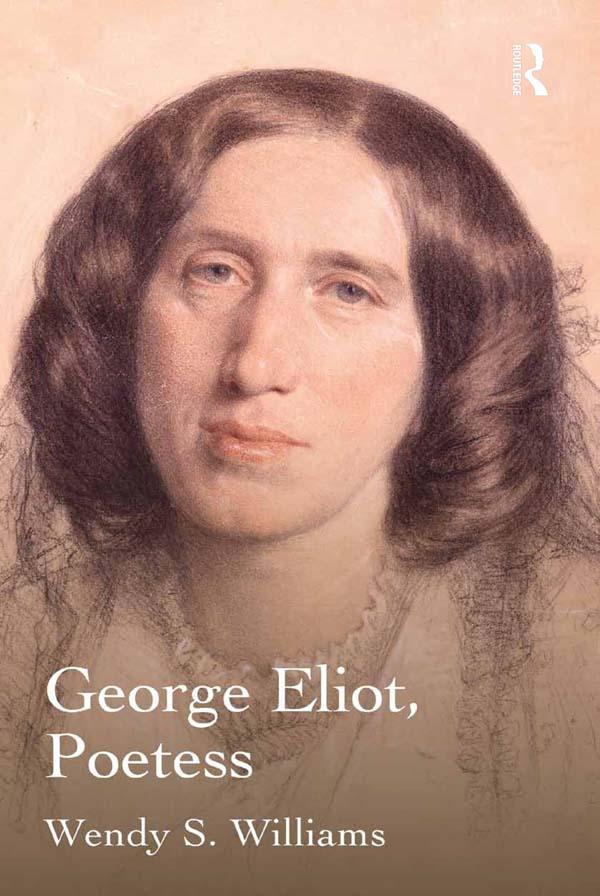
The position of George Eliot’s poetry within Victorian poetry and within her own canon is crucial for an accurate picture of the writer, as Wendy S. Williams shows in her in-depth examination of Eliot’s poetry and her role as poetess. Williams argues that even more clearly than her fiction, Eliot’s poetry reveals the development of her belief in sympathy as a replacement for orthodox religious views. With knowledge of the Bible and a firm understanding of society’s expectations for female authorship, Eliot consciously participated in a tradition of women poets who relied on feminine piety and poetry to help refine society through compassion and fellow-feeling. Williams examines Eliot’s poetry in relationship to her gender and sexual politics and her shifting religious beliefs, showing that Eliot’s views on gender and religion informed her adoption of the poetess persona. By taking into account Eliot’s poetess treatment of community and motherhood, Williams suggests, readers come to view her not only as a writer of fiction, an intellectual, and a social commentator, but also as a woman who longed to nurture, participate in, and foster human relationships.
Betal nemt med kort, Klarna, Apple Pay eller Google Pay. Ikke tilfreds? Du har altid 14 dages fortrydelsesret. Læs mere i vores vilkår. Har du spørgsmål, så send os en mail på hello@memmo.org.
Memmo gør det nemmere at studere – uanset hvor du er i verden. Hos os samler du dine kursusbøger og smarte studieværktøjer ét sted: resuméer, quizzer, podcasts og flashcards. Og så er der Ted, din studieven, der svarer på alt, du undrer dig over. Over 50 000 studerende studerer allerede her – bygget til at hjælpe dig med at lære hurtigere og stresse mindre.
Du kan måske også lide
Køb bogen0