
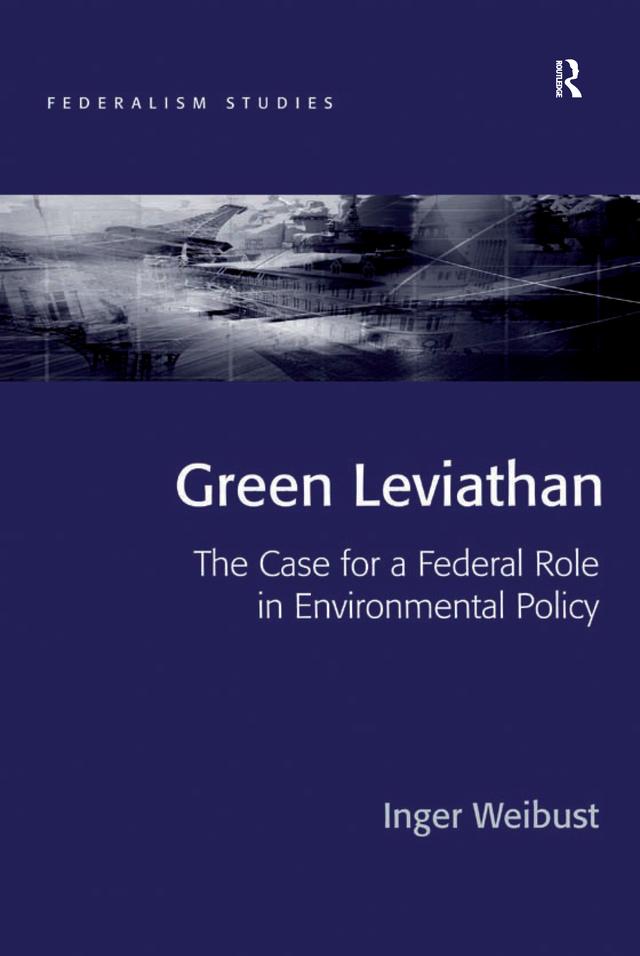
The US, Switzerland and Canada are wealthy democracies that should be conducive to effective decentralized or cooperative environmental policy-making. However, a closer examination of their environmental policy over many decades finds no evidence that these approaches have worked. So does it matter which level of government makes policy? Can cooperation between sub-national governments protect the environment? Building on comparative case studies on air and water pollution and making use of extensive historical material, Inger Weibust questions how governance structure affects environmental policy performance in the US, Switzerland, Canada and the European Union. The research breaks new ground by studying formal and informal environmental cooperation. It analyzes whether federal systems with more centralized policy-making produce stricter environmental policies and debates whether devolution and the establishment of subsidiaries will lead to less environmental protection. An essential insight into the complexities of policy-making and governance structures, this book is an important contribution to the growing debates surrounding comparative federalism and multi-level governance.
Betal nemt med kort, Klarna, Apple Pay eller Google Pay. Ikke tilfreds? Du har altid 14 dages fortrydelsesret. Læs mere i vores vilkår. Har du spørgsmål, så send os en mail på hello@memmo.org.
Memmo gør det nemmere at studere – uanset hvor du er i verden. Hos os samler du dine kursusbøger og smarte studieværktøjer ét sted: resuméer, quizzer, podcasts og flashcards. Og så er der Ted, din studieven, der svarer på alt, du undrer dig over. Over 50 000 studerende studerer allerede her – bygget til at hjælpe dig med at lære hurtigere og stresse mindre.
Du kan måske også lide
Køb bogen0