
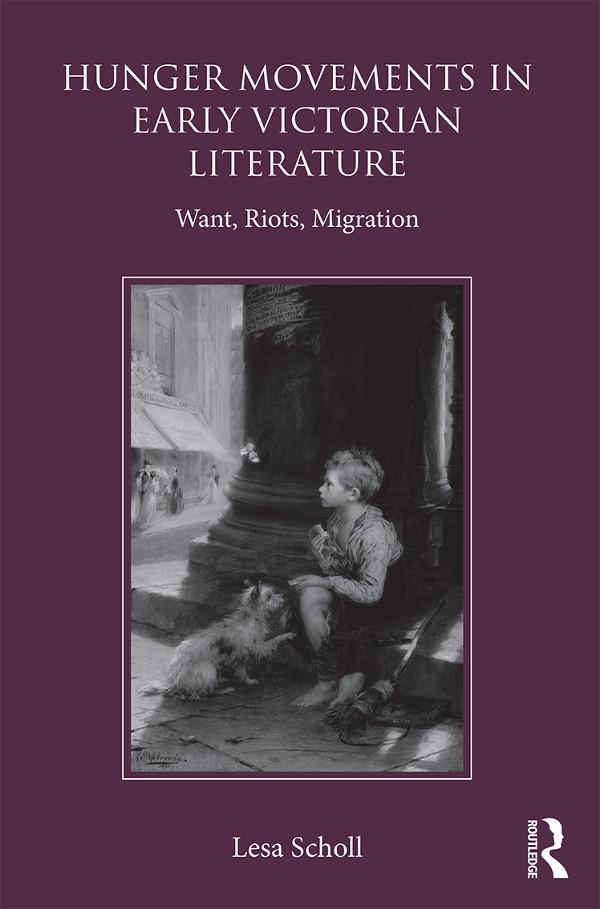
In Hunger Movements in Early Victorian Literature, Lesa Scholl explores the ways in which the language of starvation interacts with narratives of emotional and intellectual want to create a dynamic, evolving notion of hunger. Scholl's interdisciplinary study emphasises literary analysis, sensory history, and political economy to interrogate the progression of hunger in Britain from the early 1830s to the late 1860s. Examining works by Charles Dickens, Harriet Martineau, George Eliot, Elizabeth Gaskell, Henry Mayhew, and Charlotte Bronte, Scholl argues for the centrality of hunger in social development and understanding. She shows how the rhetoric of hunger moves beyond critiques of physical starvation to a paradigm in which the dominant narrative of civilisation is predicated on the continual progress and evolution of literal and metaphorical taste. Her study makes a persuasive case for how hunger, as a signifier of both individual and corporate ambition, is a necessarily self-interested and increasingly violent agent of progress within the discourse of political economy that emerged in the eighteenth century and subsequently shaped nineteenth-century social and political life.
Betal nemt med kort, Klarna, Apple Pay eller Google Pay. Ikke tilfreds? Du har altid 14 dages fortrydelsesret. Læs mere i vores vilkår. Har du spørgsmål, så send os en mail på hello@memmo.org.
Memmo gør det nemmere at studere – uanset hvor du er i verden. Hos os samler du dine kursusbøger og smarte studieværktøjer ét sted: resuméer, quizzer, podcasts og flashcards. Og så er der Ted, din studieven, der svarer på alt, du undrer dig over. Over 50 000 studerende studerer allerede her – bygget til at hjælpe dig med at lære hurtigere og stresse mindre.