
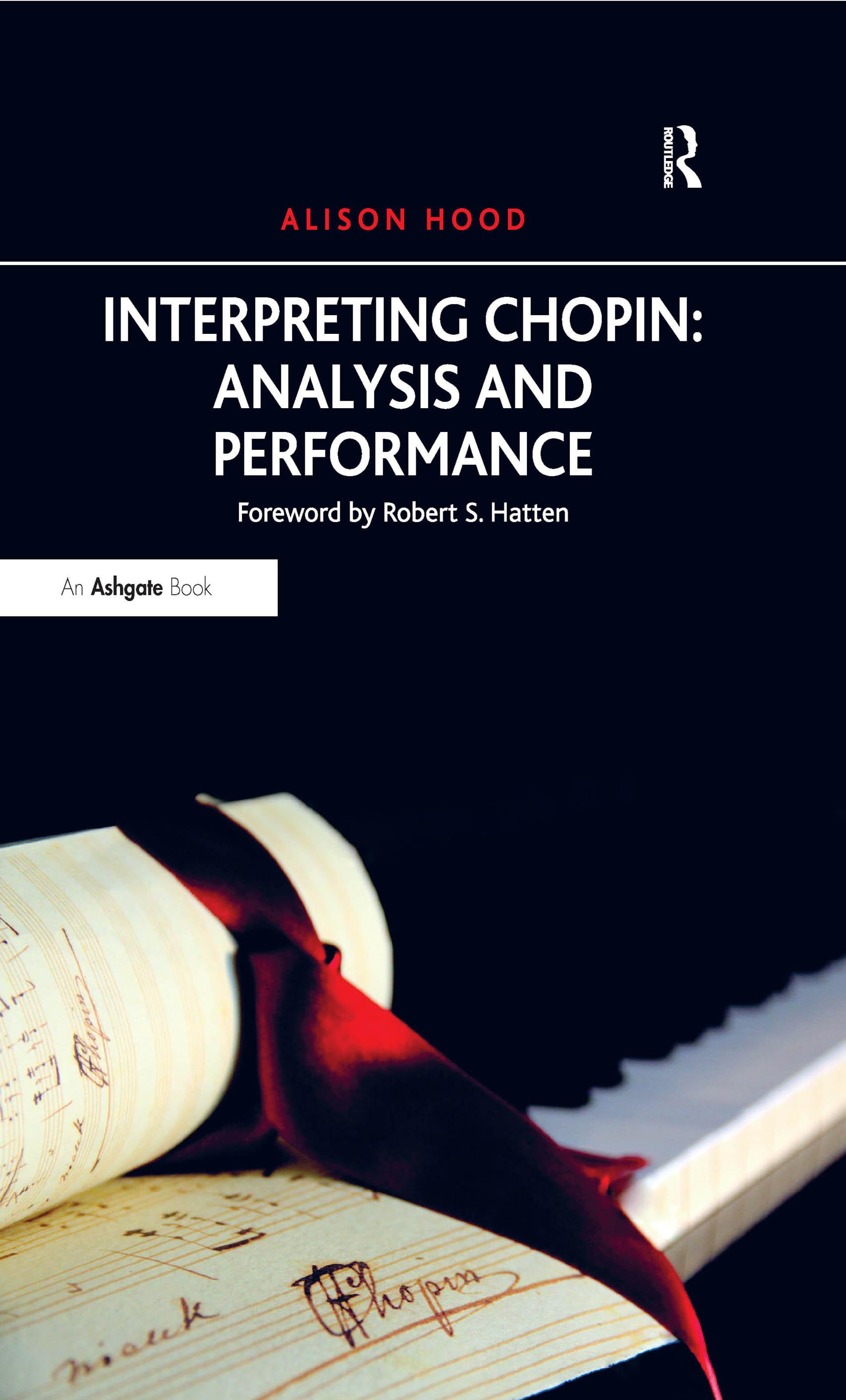
Music theory is often seen as independent from - even antithetical to - performance. While music theory is an intellectual enterprise, performance requires an intuitive response to the music. But this binary opposition is a false one, which serves neither the theorist nor the performer. In Interpreting Chopin Alison Hood brings her experience as a performer to bear on contemporary analytical models. She combines significant aspects of current analytical approaches and applies that unique synthetic method to selected works by Chopin, casting new light on the composer’s preludes, nocturnes and barcarolle. An extension of Schenkerian analysis, the specific combination of five aspects distinguishes Hood’s method from previous analytical approaches. These five methods are: attention to the rhythms created by pitch events on all structural levels; a detailed accounting of the musical surface; 'strict use' of analytical notation, following guidelines offered by Steve Larson; a continual concern with what have been called 'strategies' or 'premises'; and an exploration of how recorded performances might be viewed in terms of analytical decisions, or might even shape those decisions. Building on the work of such authors as William Rothstein, Carl Schachter and John Rink, Hood’s approach to Chopin’s oeuvre raises interpretive questions of central interest to performers.
Betal nemt med kort, Klarna, Apple Pay eller Google Pay. Ikke tilfreds? Du har altid 14 dages fortrydelsesret. Læs mere i vores vilkår. Har du spørgsmål, så send os en mail på hello@memmo.org.
Memmo gør det nemmere at studere – uanset hvor du er i verden. Hos os samler du dine kursusbøger og smarte studieværktøjer ét sted: resuméer, quizzer, podcasts og flashcards. Og så er der Ted, din studieven, der svarer på alt, du undrer dig over. Over 50 000 studerende studerer allerede her – bygget til at hjælpe dig med at lære hurtigere og stresse mindre.
Du kan måske også lide
Køb bogen0