
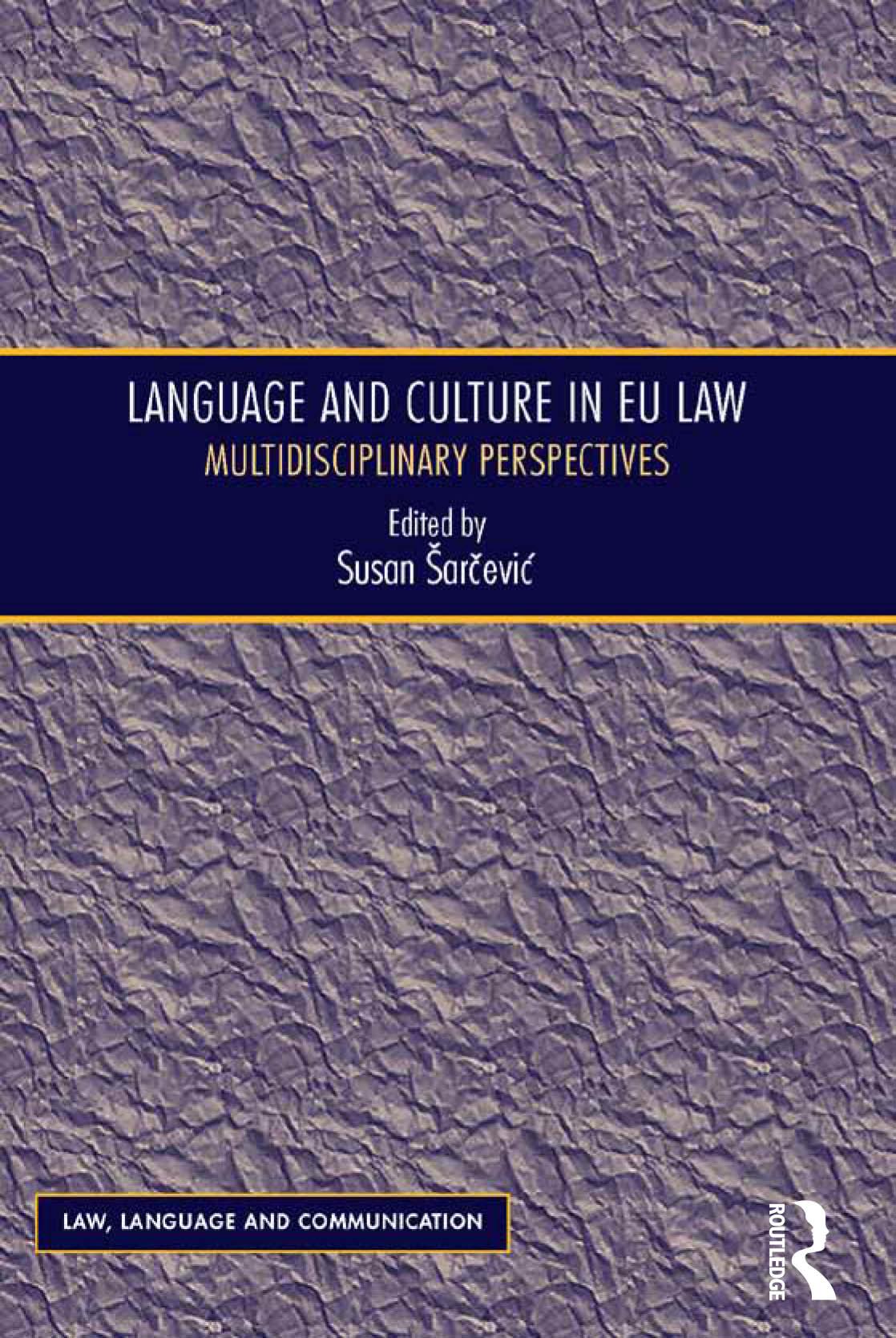
Written by distinguished legal and linguistic scholars and practitioners from the EU institutions, the contributions in this volume provide multidisciplinary perspectives on the vital role of language and culture as key forces shaping the dynamics of EU law. The broad spectrum of topics sheds light on major Europeanization processes at work: the gradual creation of a neutralized EU legal language with uniform concepts, for example, in the DCFR and CESL, and the emergence of a European legal culture. The main focus is on EU multilingual lawmaking, with special emphasis on problems of legal translation and term formation in the multilingual and multicultural European context, including comparative law aspects and an analysis of the advantages and disadvantages of translating from a lingua franca. Of equal importance are issues relating to the multilingual interpretation of EU legislation and case law by the national courts and interpretative techniques of the CJEU, as well as the viability of the autonomy of EU legal concepts and the need for the professionalization of court interpreters Union-wide in response to Directive 2010/64/EU. Offering a good mix of theory and practice, this book is intended for scholars, practitioners and students with a special interest in the legal-linguistic aspects of EU law and their impact on old and new Member States and candidate countries as well.
Betal nemt med kort, Klarna, Apple Pay eller Google Pay. Ikke tilfreds? Du har altid 14 dages fortrydelsesret. Læs mere i vores vilkår. Har du spørgsmål, så send os en mail på hello@memmo.org.
Memmo gør det nemmere at studere – uanset hvor du er i verden. Hos os samler du dine kursusbøger og smarte studieværktøjer ét sted: resuméer, quizzer, podcasts og flashcards. Og så er der Ted, din studieven, der svarer på alt, du undrer dig over. Over 50 000 studerende studerer allerede her – bygget til at hjælpe dig med at lære hurtigere og stresse mindre.
Du kan måske også lide
Køb bogen0