
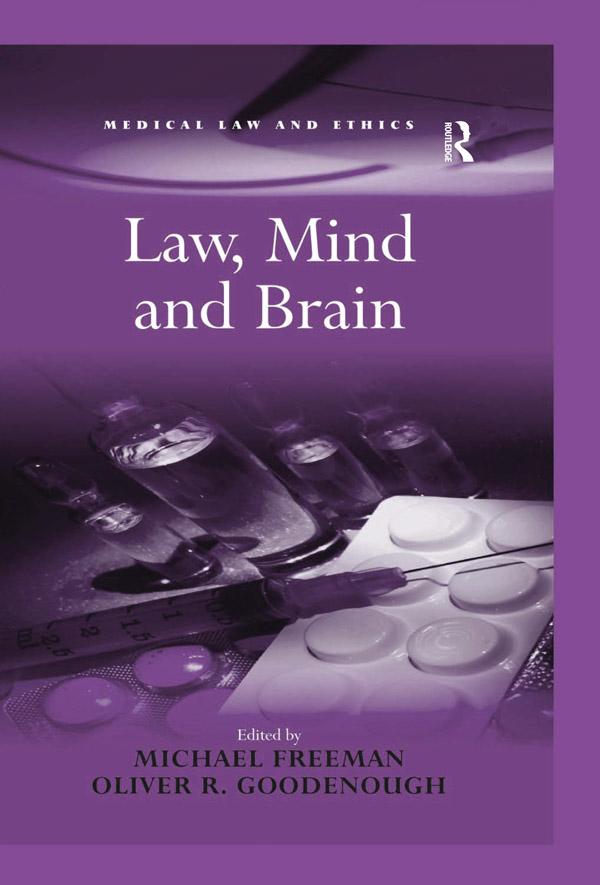
Over the past 20 years, cognitive neuroscience has revolutionized our ability to understand the nature of human thought. Working with the understandings of traditional psychology, the new brain science is transforming many disciplines, from economics to literary theory. These developments are now affecting the law and there is an upsurge of interest in the potential of neuroscience to contribute to our understanding of criminal and civil law and our system of justice in general. The international and interdisciplinary chapters in this volume are written by experts in criminal behaviour, civil law and jurisprudence. They concentrate on the potential of neuroscience to increase our understanding of blame and responsibility in such areas as juveniles and the death penalty, evidence and procedure, neurological enhancement and treatment, property, end-of-life choices, contracting and the effects of words and pictures in law. This collection suggests that legal scholarship and practice will be increasingly enriched by an interdisciplinary study of law, mind and brain and is a valuable addition to the emerging field of neurolaw.
Betal nemt med kort, Klarna, Apple Pay eller Google Pay. Ikke tilfreds? Du har altid 14 dages fortrydelsesret. Læs mere i vores vilkår. Har du spørgsmål, så send os en mail på hello@memmo.org.
Memmo gør det nemmere at studere – uanset hvor du er i verden. Hos os samler du dine kursusbøger og smarte studieværktøjer ét sted: resuméer, quizzer, podcasts og flashcards. Og så er der Ted, din studieven, der svarer på alt, du undrer dig over. Over 50 000 studerende studerer allerede her – bygget til at hjælpe dig med at lære hurtigere og stresse mindre.
Du kan måske også lide
Køb bogen0