
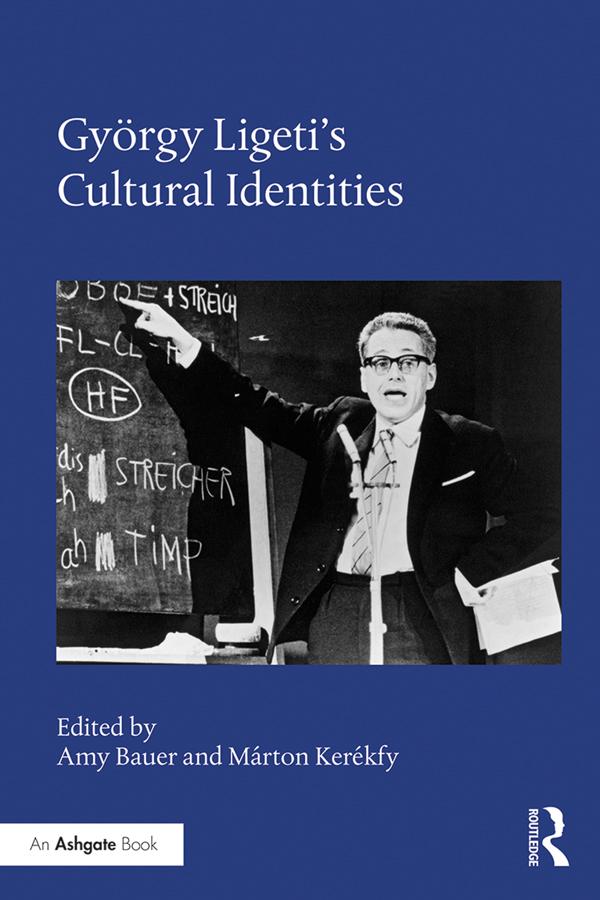
Since György Ligeti’s death in 2006, there has been a growing acknowledgement of how central he was to the late twentieth-century cultural landscape. This collection is the first book devoted to exploring the composer’s life and music within the context of his East European roots, revealing his dual identities as both Hungarian national and cosmopolitan modernist. Contributors explore the artistic and socio-cultural contexts of Ligeti’s early works, including composition and music theory, the influence of East European folk music, notions of home and identity, his ambivalent attitude to his Hungarian past and his references to his homeland in his later music. Many of the valuable insights offered profit from new research undertaken at the Paul Sacher Foundation, Basel, while also drawing on the knowledge of long-time associates such as the composer’s assistant, Louise Duchesneau. The contributions as a whole reveal Ligeti’s thoroughly cosmopolitan milieu and values, and illuminate why his music continues to inspire new generations of performers, composers and listeners.
Betal nemt med kort, Klarna, Apple Pay eller Google Pay. Ikke tilfreds? Du har altid 14 dages fortrydelsesret. Læs mere i vores vilkår. Har du spørgsmål, så send os en mail på hello@memmo.org.
Memmo gør det nemmere at studere – uanset hvor du er i verden. Hos os samler du dine kursusbøger og smarte studieværktøjer ét sted: resuméer, quizzer, podcasts og flashcards. Og så er der Ted, din studieven, der svarer på alt, du undrer dig over. Over 50 000 studerende studerer allerede her – bygget til at hjælpe dig med at lære hurtigere og stresse mindre.