
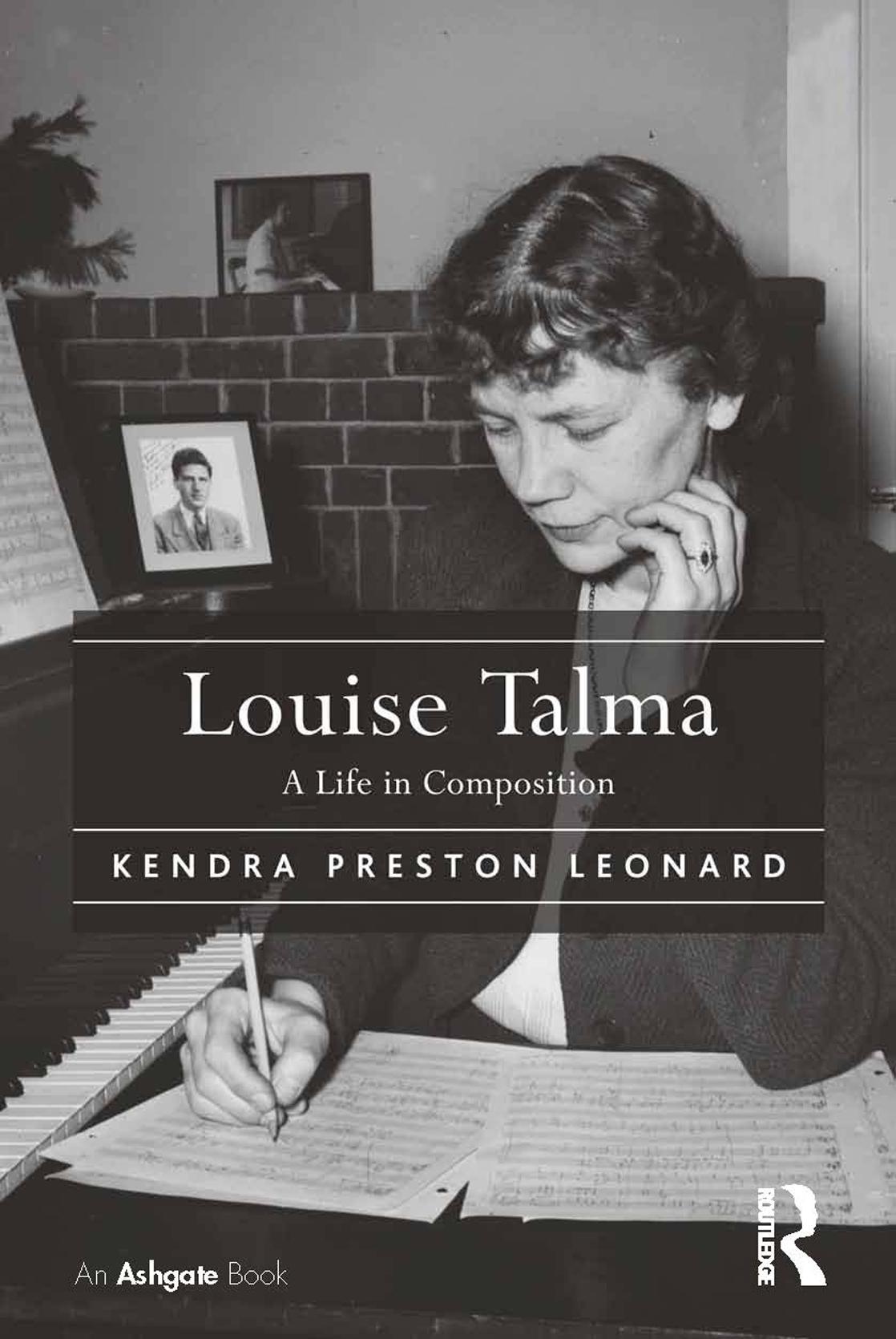
American composer Louise Talma (1906-1996) was the first female winner of two back-to-back Guggenheim Awards (1946, 1947), the first American woman to have an opera premiered in Europe (1962), the first female winner of the Sibelius Award for Composition (1963), and the first woman composer elected to the American Academy and Institute of Arts and Letters (1974). This book analyses Talma’s works in the context of her life, focusing on the effects on her work of two major changes she made during her adult life: her conversion to Catholicism as an adult, under the guidance of Nadia Boulanger, and her adoption of serial compositional techniques. Employing approaches from traditional musical analysis, feminist and queer musicology, and women’s autobiographical theory to examine Talma’s body of works, comprising some eighty pieces, this is the first full-length study of this pioneering composer. Exploring Talma’s compositional language, text-setting practices, and the incorporation of autobiographical elements into her works using her own letters, sketches, and scores, as well as a number of other relevant documents, this book positions Talma’s contributions to serial and atonal music in the United States, considers her role as a woman composer during the twentieth century, and evaluates the legacy of her works and career in American music.
Betal nemt med kort, Klarna, Apple Pay eller Google Pay. Ikke tilfreds? Du har altid 14 dages fortrydelsesret. Læs mere i vores vilkår. Har du spørgsmål, så send os en mail på hello@memmo.org.
Memmo gør det nemmere at studere – uanset hvor du er i verden. Hos os samler du dine kursusbøger og smarte studieværktøjer ét sted: resuméer, quizzer, podcasts og flashcards. Og så er der Ted, din studieven, der svarer på alt, du undrer dig over. Over 50 000 studerende studerer allerede her – bygget til at hjælpe dig med at lære hurtigere og stresse mindre.
Du kan måske også lide
Køb bogen0