
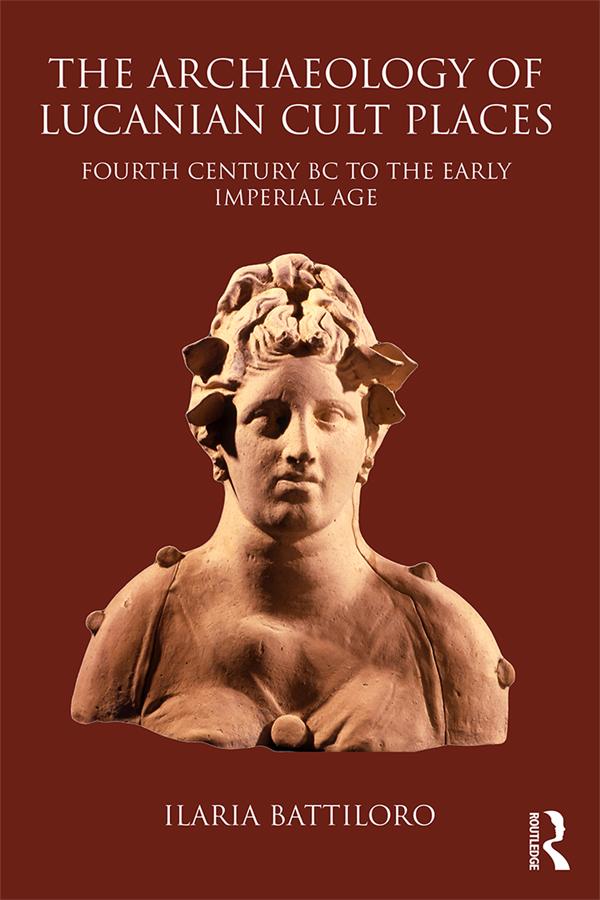
With the emergence and structuring of the Lucanian ethnos during the fourth century BC, a network of cult places, set apart from habitation spaces, was created at the crossroads of the most important communication routes of ancient Lucania. These sanctuaries became centers of social and political aggregation of the local communities: a space in which the community united for all the social manifestations that, in urban societies, were usually performed within the city space.
With a detailed analysis of the archaeological record, this study traces the historical and archaeological narrative of Lucanian cult places from their creation to the Late Republican Age, which saw the incorporation of southern Italy into the Roman state. By placing the sanctuaries within their territorial, political, social, and cultural context, Battiloro offers insight into the diachronic development of sacred architecture and ritual customs in ancient Lucania.
The author highlights the role of material evidence in constructing the significance of sanctuaries in the historical context in which they were used, and crucial new evidence from the most recent archaeological investigations is explored in order to define dynamics of contact and interaction between Lucanians and Romans on the eve of the Roman conquest.
Betal nemt med kort, Klarna, Apple Pay eller Google Pay. Ikke tilfreds? Du har altid 14 dages fortrydelsesret. Læs mere i vores vilkår. Har du spørgsmål, så send os en mail på hello@memmo.org.
Memmo gør det nemmere at studere – uanset hvor du er i verden. Hos os samler du dine kursusbøger og smarte studieværktøjer ét sted: resuméer, quizzer, podcasts og flashcards. Og så er der Ted, din studieven, der svarer på alt, du undrer dig over. Over 50 000 studerende studerer allerede her – bygget til at hjælpe dig med at lære hurtigere og stresse mindre.