
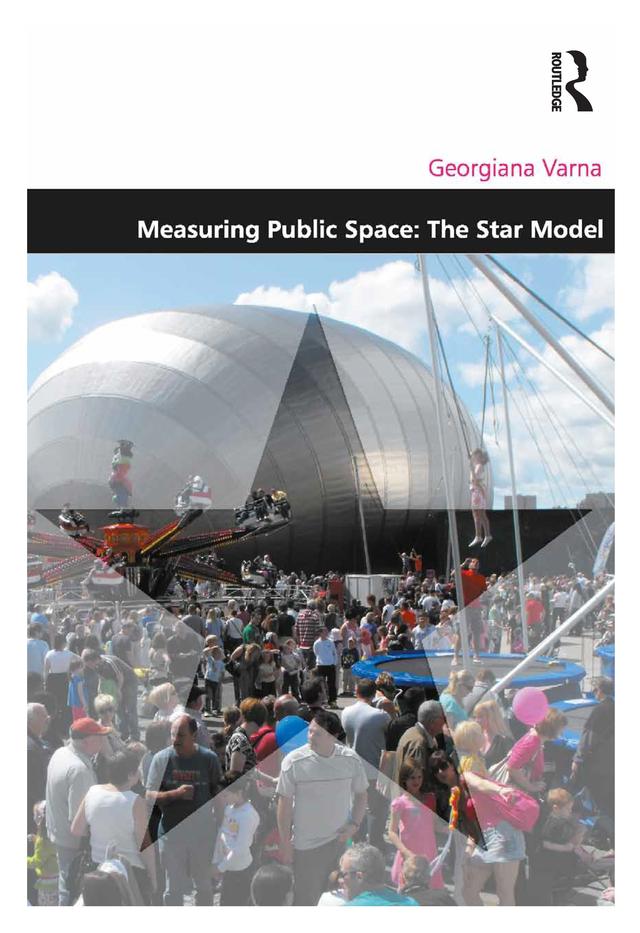
In the rapidly expanding public space debate of the past few years, a recurring theme is the ’loss of publicness’ of contemporary urban public places. This book takes up the challenge to find an objective way to prove or disprove this phenomenon. By taking the reader through a systematic and multi-disciplinary literature review it asks the deceptively simple question: ’What is publicness?’ It answers this by first developing a new theoretical approach - ’The dual nature of public space’, and secondly a new analytical tool for measuring it - ’The Star Model of Publicness’. This pragmatic approach to analysing public space is tested then on three new public places recently created on the post-industrial waterfront of the River Clyde, in the city of Glasgow, UK. By seeing where and why certain public places fail, direct and informed interventions can be made to improve them, and through this contribute to the building of more attractive and sustainable cities. By adopting a multi-disciplinary approach to shed light on this ’slippery’ concept, this book shows how urban design can complement other disciplines when tackling the complex task of understanding and improving the built environment’s public realm. It also bridges the gap between theory and practice as it draws from empirical research to suggest more quantitative approaches towards auditing and improving public places.
Betal nemt med kort, Klarna, Apple Pay eller Google Pay. Ikke tilfreds? Du har altid 14 dages fortrydelsesret. Læs mere i vores vilkår. Har du spørgsmål, så send os en mail på hello@memmo.org.
Memmo gør det nemmere at studere – uanset hvor du er i verden. Hos os samler du dine kursusbøger og smarte studieværktøjer ét sted: resuméer, quizzer, podcasts og flashcards. Og så er der Ted, din studieven, der svarer på alt, du undrer dig over. Over 50 000 studerende studerer allerede her – bygget til at hjælpe dig med at lære hurtigere og stresse mindre.
Du kan måske også lide
Køb bogen0