
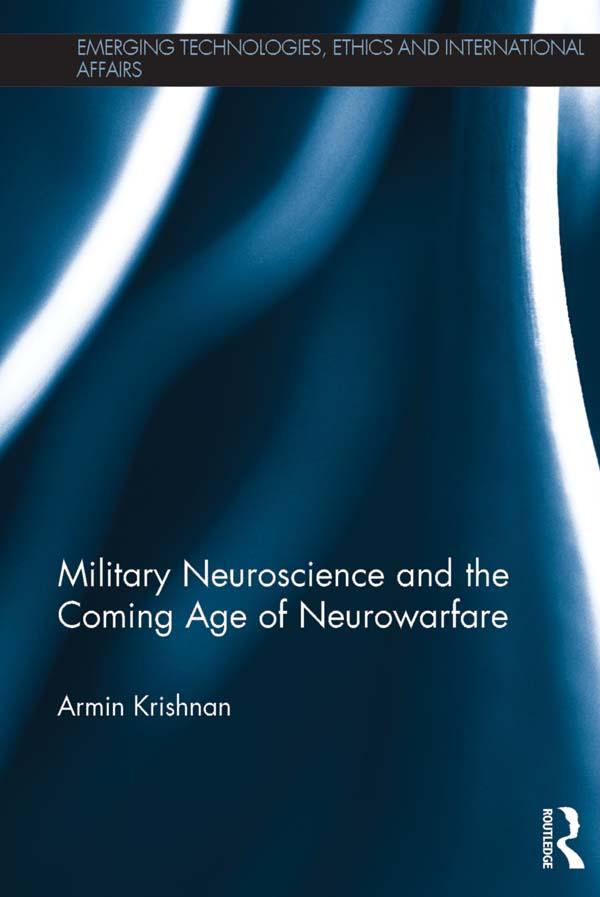
Krishnan describes military applications of neuroscience research and emerging neurotechnology with relevance to the conduct of armed conflict and law enforcement. This work builds upon literature by scholars such as Moreno and Giordano and fills an existing gap, not only in terms of reviewing available and future neurotechnologies and relevant applications, but by discussing how the military pursuit of these technologies fits into the overall strategic context. The first to sketch future neurowarfare by looking at its potentials as well as its inherent limitations, this book’s main theme is how military neuroscience will enhance and possibly transform both classical psychological operations and cyber warfare. Its core argument is that nonlethal strategies and tactics could become central to warfare in the first half of the twenty-first century. This creates both humanitarian opportunities in making war less bloody and burdensome as well as some unprecedented threats and dangers in terms of preserving freedom of thought and will in a coming age where minds can be manipulated with great precision.
Betal nemt med kort, Klarna, Apple Pay eller Google Pay. Ikke tilfreds? Du har altid 14 dages fortrydelsesret. Læs mere i vores vilkår. Har du spørgsmål, så send os en mail på hello@memmo.org.
Memmo gør det nemmere at studere – uanset hvor du er i verden. Hos os samler du dine kursusbøger og smarte studieværktøjer ét sted: resuméer, quizzer, podcasts og flashcards. Og så er der Ted, din studieven, der svarer på alt, du undrer dig over. Over 50 000 studerende studerer allerede her – bygget til at hjælpe dig med at lære hurtigere og stresse mindre.
Du kan måske også lide
Køb bogen0