
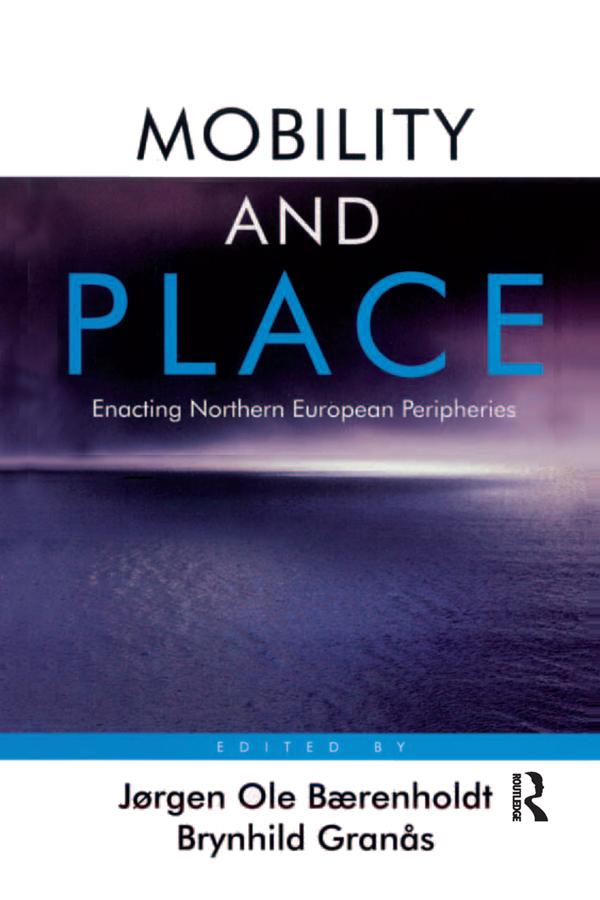
The Northern peripheries of Europe, which are covered by this book, are associated with remoteness, the frontier, isolated communities, colonialism and resource extraction. Recently, huge projects in petroleum and hydropower have been located there, and the region has become better known as an attractive tourist destination. Although these spaces are perceived as being marginal, they are inhabited and linked into globalization and international agendas. This book examines how people live in such remote spaces in an emerging global world of connectivity, interdependency, mobility and non-linear dynamics. The various case studies examine a wide range of experiences, ranging from tourists and local settlers to those who migrate for labour in old or new industries, or to pursue the hybrid urban/rural life of the periphery. In this book, mobility and place come together. The analyses demonstrate how mobility and place mutually constitute each other and how specific relationships between the two aspects are crucial in the making of societies. The authors study attempts to reinvent places, together with connections and the opening of 'new scapes' in order to sustain businesses, municipalities and people's livelihood.
Betal nemt med kort, Klarna, Apple Pay eller Google Pay. Ikke tilfreds? Du har altid 14 dages fortrydelsesret. Læs mere i vores vilkår. Har du spørgsmål, så send os en mail på hello@memmo.org.
Memmo gør det nemmere at studere – uanset hvor du er i verden. Hos os samler du dine kursusbøger og smarte studieværktøjer ét sted: resuméer, quizzer, podcasts og flashcards. Og så er der Ted, din studieven, der svarer på alt, du undrer dig over. Over 50 000 studerende studerer allerede her – bygget til at hjælpe dig med at lære hurtigere og stresse mindre.
Du kan måske også lide
Køb bogen0