
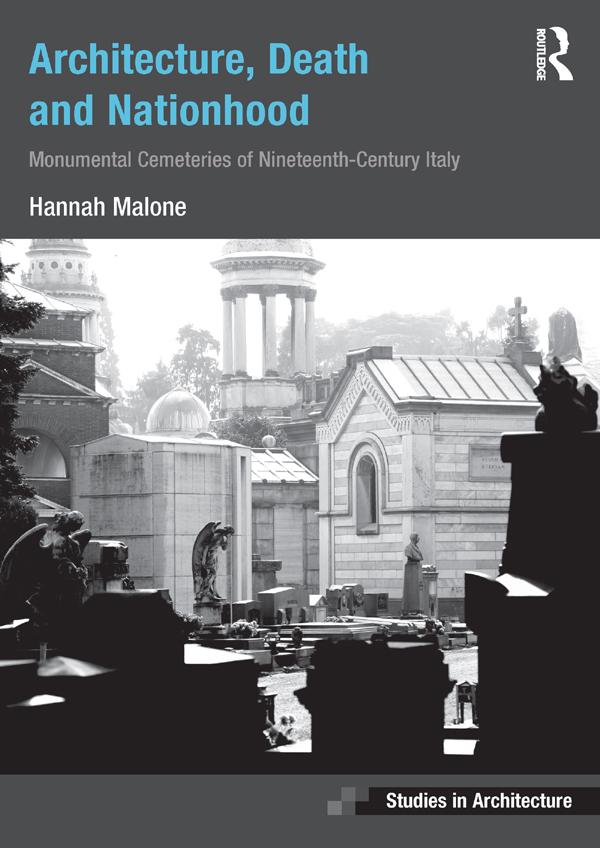
In the nineteenth century, new cemeteries were built in many Italian cities that were unique in scale and grandeur, and which became destinations on the Grand Tour. From the Middle Ages, the dead had been buried in churches and urban graveyards but, in the 1740s, a radical reform across Europe prohibited burial inside cities and led to the creation of suburban burial grounds. Italy’s nineteenth-century cemeteries were distinctive as monumental or architectural structures, rather than landscaped gardens. They represented a new building type that emerged in response to momentous changes in Italian politics, tied to the fight for independence and the creation of the nation-state.
As the first survey of Italy’s monumental cemeteries, the book explores the relationship between architecture and politics, or how architecture is formed by political forces. As cities of the dead, cemeteries mirrored the spaces of the living. Against the backdrop of Italy’s unification, they conveyed the power of the new nation, efforts to construct an Italian identity, and conflicts between Church and state. Monumental cemeteries helped to foster the narratives and mentalities that shaped Italy as a new nation.
Betal nemt med kort, Klarna, Apple Pay eller Google Pay. Ikke tilfreds? Du har altid 14 dages fortrydelsesret. Læs mere i vores vilkår. Har du spørgsmål, så send os en mail på hello@memmo.org.
Memmo gør det nemmere at studere – uanset hvor du er i verden. Hos os samler du dine kursusbøger og smarte studieværktøjer ét sted: resuméer, quizzer, podcasts og flashcards. Og så er der Ted, din studieven, der svarer på alt, du undrer dig over. Over 50 000 studerende studerer allerede her – bygget til at hjælpe dig med at lære hurtigere og stresse mindre.