
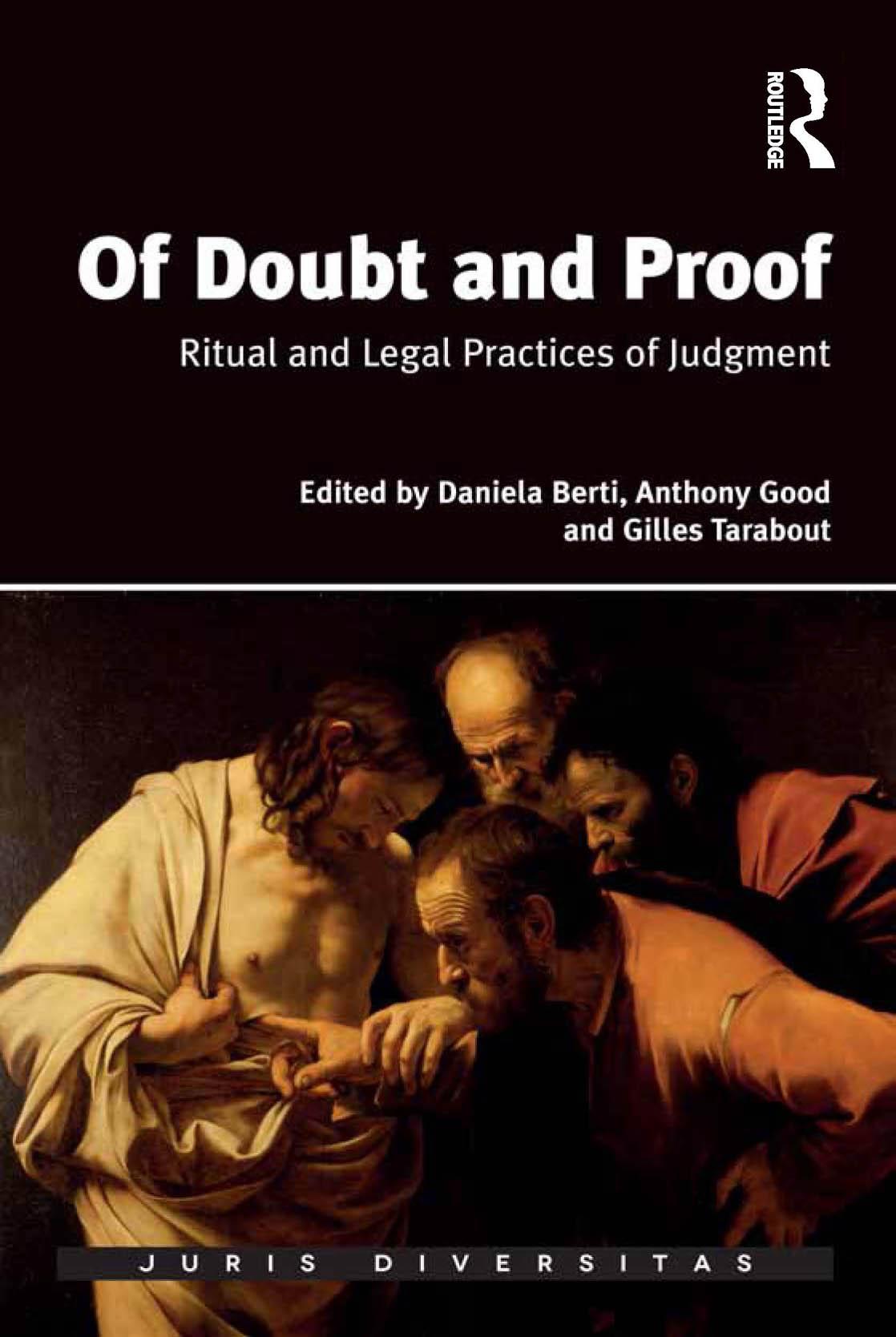
All institutions concerned with the process of judging - whether it be deciding between alternative courses of action, determining a judge’s professional integrity, assigning culpability for an alleged crime, or ruling on the credibility of an asylum claimant - are necessarily directly concerned with the question of doubt. By putting ritual and judicial settings into comparative perspective, in contexts as diverse as Indian and Taiwanese divination and international cricket, as well as legal processes in France, the UK, India, Denmark, and Ghana, this book offers a comprehensive and novel perspective on techniques for casting and dispelling doubt, and the roles they play in achieving verdicts or decisions that appear both valid and just. Broadening the theoretical understandings of the social role of doubt, both in social science and in law, the authors present these understandings in ways that not only contribute to academic knowledge but are also useful to professionals and other participants engaged in the process of judging. This collection will consequently be of great interest to academics researching in the fields of legal anthropology, ritual studies, legal sociology, criminology, and socio-legal studies.
Betal nemt med kort, Klarna, Apple Pay eller Google Pay. Ikke tilfreds? Du har altid 14 dages fortrydelsesret. Læs mere i vores vilkår. Har du spørgsmål, så send os en mail på hello@memmo.org.
Memmo gør det nemmere at studere – uanset hvor du er i verden. Hos os samler du dine kursusbøger og smarte studieværktøjer ét sted: resuméer, quizzer, podcasts og flashcards. Og så er der Ted, din studieven, der svarer på alt, du undrer dig over. Over 50 000 studerende studerer allerede her – bygget til at hjælpe dig med at lære hurtigere og stresse mindre.
Du kan måske også lide
Køb bogen0