
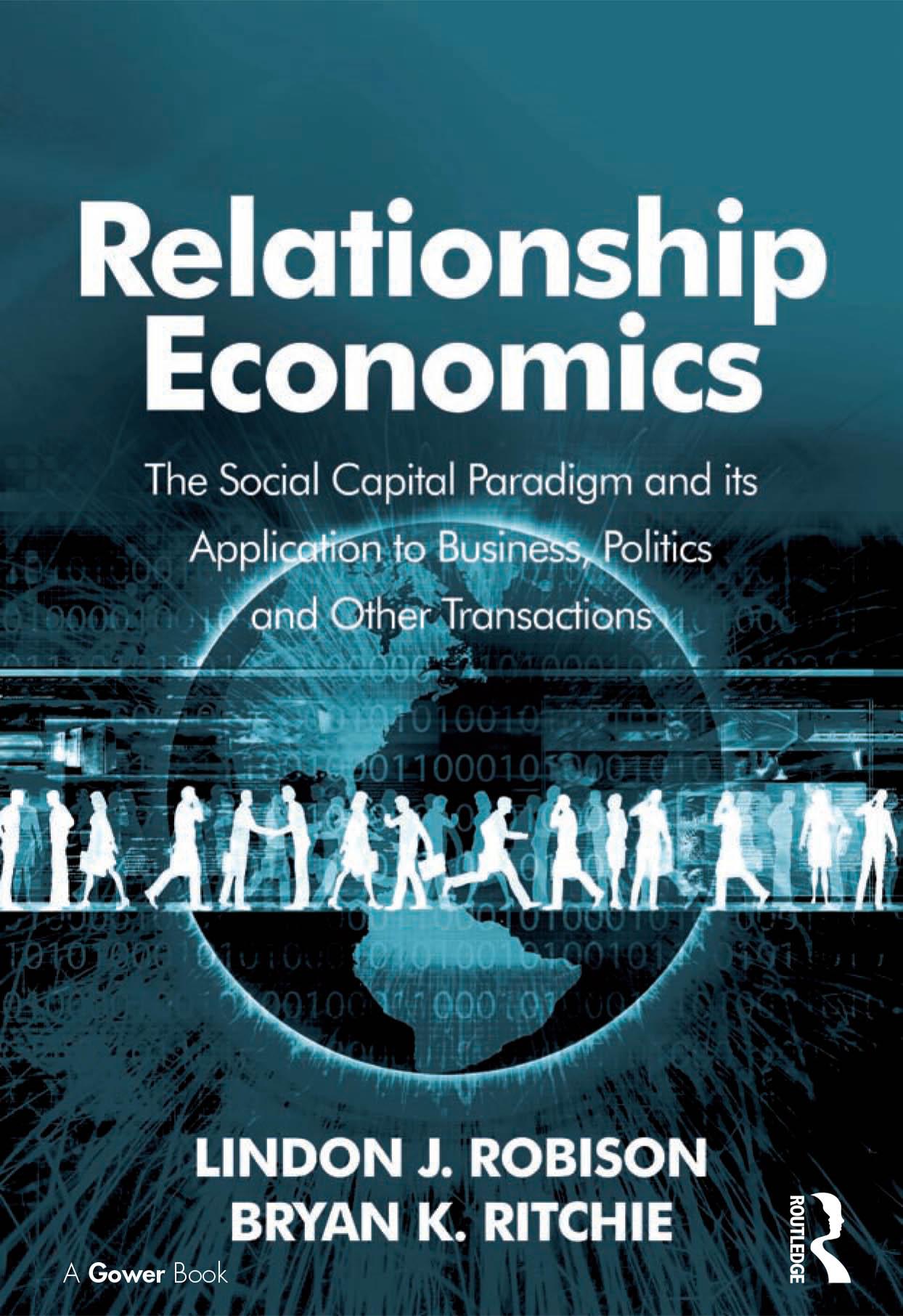
In a 24/7 world and a global economy, there is no doubt that relationships impact virtually every economic transaction. In Relationship Economics, Lindon Robison and Bryan Ritchie argue that what needs to be understood is not just whether relationships matter (which, of course, they do), but also, how much, and in what circumstances they should matter. Providing a rigorous and measurable definition of the way that relationships among individuals create a capital, social capital, that can be saved, spent, and used like other forms of capital, Robison and Ritchie use numerous examples and insightful analysis, to explain how social capital shapes our ability to reduce poverty, understand corruption, encourage democracy, facilitate income equality, and respond to globalization. The first part of the book explains how social capital can be manipulated, stored, expended, and invested. The second part explores how levels of social capital within relationships influence economic transactions both positively and negatively, which in turn shape poverty levels, economic efficiency, levels and types of political participation, and institutional structures.
Betal nemt med kort, Klarna, Apple Pay eller Google Pay. Ikke tilfreds? Du har altid 14 dages fortrydelsesret. Læs mere i vores vilkår. Har du spørgsmål, så send os en mail på hello@memmo.org.
Memmo gør det nemmere at studere – uanset hvor du er i verden. Hos os samler du dine kursusbøger og smarte studieværktøjer ét sted: resuméer, quizzer, podcasts og flashcards. Og så er der Ted, din studieven, der svarer på alt, du undrer dig over. Over 50 000 studerende studerer allerede her – bygget til at hjælpe dig med at lære hurtigere og stresse mindre.
Du kan måske også lide
Køb bogen0