
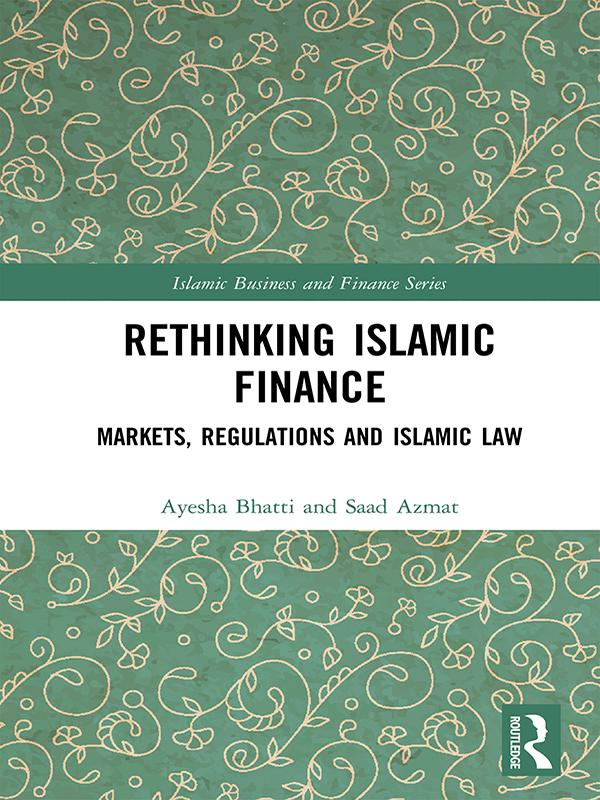
Islamic finance’s phenomenal growth owes to the Shariah compliant nature of its financial instruments. Shariah forbids the charging of interest (Riba) and instead promulgates risk-sharing and trade-based modes of financing. The Islamic financial industry has been subject to both critique and admiration. Critics argue that Islamic instruments (bearing debt-based structures) differ from their conventional counterparts only in legal lexicon and not in economic impact. The admirers argue that such instruments, irrespective of wider economic implications, rigorously comply with ‘juristically sound’ Islamic principles.
This book aims to reconcile the above dispute. It argues that the financial impact of instruments is a consequence of the way they are priced and structured. The similarity in pricing and structures is an outcome not of the underlying Islamic financial modes but of the competitive environment in which Islamic instruments compete. Even risk-sharing and trade-based Islamic structures, if implemented in such an environment, would have a financial impact similar to that of conventional instruments.
This book has a wider appeal for both academic and non-academic audiences. It can complement undergraduate and graduate courses as an additional reading on the intricacies of Islamic financial instruments and markets. For PhD students, it would help identify future research areas. To non-academics, it offers a deeper understanding regarding the working of the Islamic finance industry.
Betal nemt med kort, Klarna, Apple Pay eller Google Pay. Ikke tilfreds? Du har altid 14 dages fortrydelsesret. Læs mere i vores vilkår. Har du spørgsmål, så send os en mail på hello@memmo.org.
Memmo gør det nemmere at studere – uanset hvor du er i verden. Hos os samler du dine kursusbøger og smarte studieværktøjer ét sted: resuméer, quizzer, podcasts og flashcards. Og så er der Ted, din studieven, der svarer på alt, du undrer dig over. Over 50 000 studerende studerer allerede her – bygget til at hjælpe dig med at lære hurtigere og stresse mindre.