
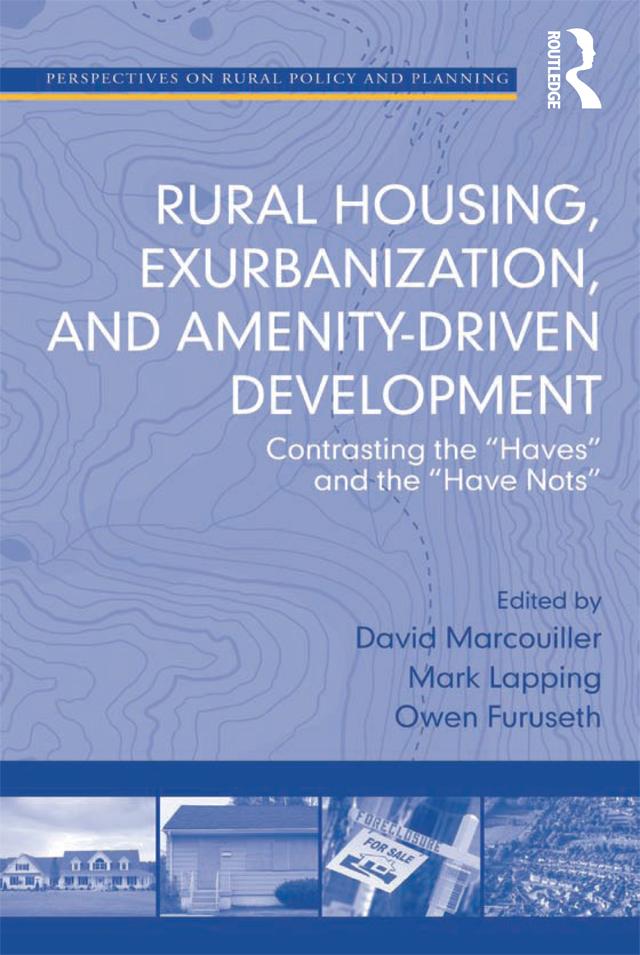
Rural America is progressing through a dramatic and sustained post-industrial economic transition. For many, traditional means of household sustenance gained through agriculture, mining and rustic tourism are giving way to large scale corporate agriculture, footloose and globally competitive manufacturing firms, and mass tourism on an unprecedented scale. These changes have brought about an increased presence of affluent amenity migrants and returnees, as well as growing reliance on low-wage, seasonal jobs to sustain rural household incomes. This book argues that the character of rural housing reflects this transition and examines this using contemporary concepts of exurbanization, rural amenity-based development, and comparative distributional descriptions of the "haves" and the "have nots". Despite rapid in-migration and dramatic changes in land use, there remains a strong tendency for communities in rural America to maintain the idyllic small-town myth of large-lot, single-family home-ownership. This neglects to take into account the growing need for affordable housing (both owner-occupied and rental properties) for local residents and seasonal workers. This book suggests that greater emphasis be placed in rural housing policies that account for this rapid social and economic change and the need for affordable rural housing alternatives.
Betal nemt med kort, Klarna, Apple Pay eller Google Pay. Ikke tilfreds? Du har altid 14 dages fortrydelsesret. Læs mere i vores vilkår. Har du spørgsmål, så send os en mail på hello@memmo.org.
Memmo gør det nemmere at studere – uanset hvor du er i verden. Hos os samler du dine kursusbøger og smarte studieværktøjer ét sted: resuméer, quizzer, podcasts og flashcards. Og så er der Ted, din studieven, der svarer på alt, du undrer dig over. Over 50 000 studerende studerer allerede her – bygget til at hjælpe dig med at lære hurtigere og stresse mindre.
Du kan måske også lide
Køb bogen0