
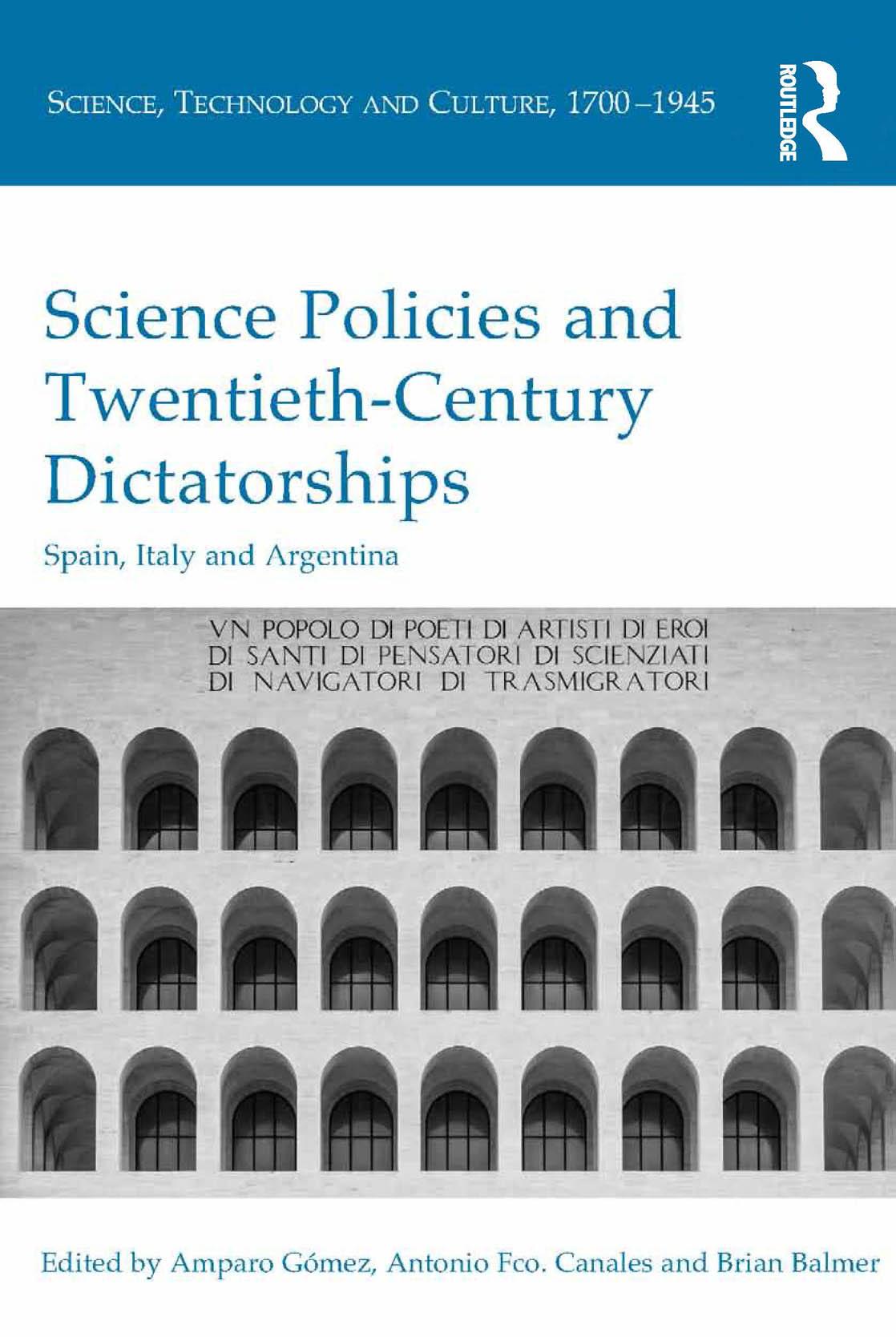
Making a fresh contribution to the political history of science, this book explores the connections between the science policies of three countries that each experienced considerable political upheaval in the twentieth century: Spain, Italy and Argentina. By focussing on these three countries, the contributors are able to present case studies that highlight the characteristics and specificities of the democratic and dictatorial political processes involved in the production of science and technology. The focus on dictatorship presents the opportunity to expand our knowledge -beyond the more extensive literature about science in Nazi Germany and Stalinist USSR -about the level of political involvement of scientists in non-democratic contexts and to what extent they act as politicians in different contexts. Key topics covered include the new forms of organization and institutionalization of science in the twentieth century; the involvement of scientific communities in the governance of science and its institutions; the role of ideology in scientific development; the scientific practices adopted by scientific communities in different contexts; and the characteristics of science and technology produced in these contexts.
Betal nemt med kort, Klarna, Apple Pay eller Google Pay. Ikke tilfreds? Du har altid 14 dages fortrydelsesret. Læs mere i vores vilkår. Har du spørgsmål, så send os en mail på hello@memmo.org.
Memmo gør det nemmere at studere – uanset hvor du er i verden. Hos os samler du dine kursusbøger og smarte studieværktøjer ét sted: resuméer, quizzer, podcasts og flashcards. Og så er der Ted, din studieven, der svarer på alt, du undrer dig over. Over 50 000 studerende studerer allerede her – bygget til at hjælpe dig med at lære hurtigere og stresse mindre.
Du kan måske også lide
Køb bogen0