
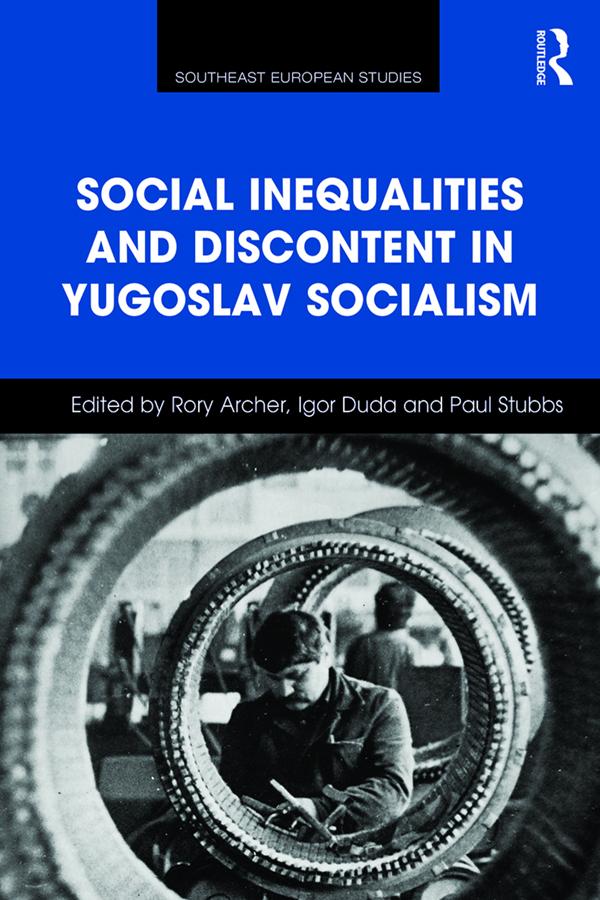
Socialist countries like Yugoslavia garnered legitimacy through appealing to social equality. Yet social stratification was characteristic of Yugoslav society and increased over the course of the state's existence. By the 1980s the country was divided on socio-economic as well as national lines. Through case studies from a range of social millieux, contributors to this volume seek to 'bring class back in' to Yugoslav historiography, exploring how theorisations of social class informed the politics and policies of social mobility and conversely, how societal or grassroots understandings of class have influenced politics and policy. Rather than focusing on regional differentiation between Yugoslav republics and provinces the emphasis is placed on social differentiation and discontent within particular communities. The contributing authors of these historical studies come from diverse disciplinary backgrounds, linking scholarship from the socialist era to contemporary research based on accessing newly available primary sources. Voices of a wide spectrum of informants are included in the volume; from factory workers and subsistence farmers to fictional television characters and pop-folk music superstars.
Betal nemt med kort, Klarna, Apple Pay eller Google Pay. Ikke tilfreds? Du har altid 14 dages fortrydelsesret. Læs mere i vores vilkår. Har du spørgsmål, så send os en mail på hello@memmo.org.
Memmo gør det nemmere at studere – uanset hvor du er i verden. Hos os samler du dine kursusbøger og smarte studieværktøjer ét sted: resuméer, quizzer, podcasts og flashcards. Og så er der Ted, din studieven, der svarer på alt, du undrer dig over. Over 50 000 studerende studerer allerede her – bygget til at hjælpe dig med at lære hurtigere og stresse mindre.
Du kan måske også lide
Køb bogen0