
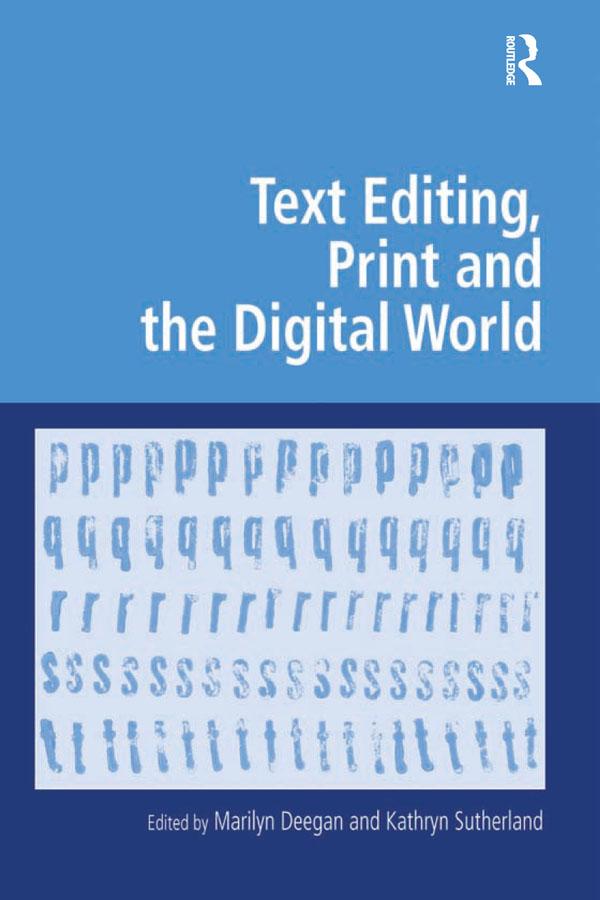
Traditional critical editing, defined by the paper and print limitations of the book, is now considered by many to be inadequate for the expression and interpretation of complex works of literature. At the same time, digital developments are permitting us to extend the range of text objects we can reproduce and investigate critically - not just books, but newspapers, draft manuscripts and inscriptions on stone. Some exponents of the benefits of new information technologies argue that in future all editions should be produced in digital or online form. By contrast, others point to the fact that print, after more than five hundred years of development, continues to set the agenda for how we think about text, even in its non-print forms. This important book brings together leading textual critics, scholarly editors, technical specialists and publishers to discuss whether and how existing paradigms for developing and using critical editions are changing to reflect the increased commitment to and assumed significance of digital tools and methodologies.
Betal nemt med kort, Klarna, Apple Pay eller Google Pay. Ikke tilfreds? Du har altid 14 dages fortrydelsesret. Læs mere i vores vilkår. Har du spørgsmål, så send os en mail på hello@memmo.org.
Memmo gør det nemmere at studere – uanset hvor du er i verden. Hos os samler du dine kursusbøger og smarte studieværktøjer ét sted: resuméer, quizzer, podcasts og flashcards. Og så er der Ted, din studieven, der svarer på alt, du undrer dig over. Over 50 000 studerende studerer allerede her – bygget til at hjælpe dig med at lære hurtigere og stresse mindre.
Du kan måske også lide
Køb bogen0