
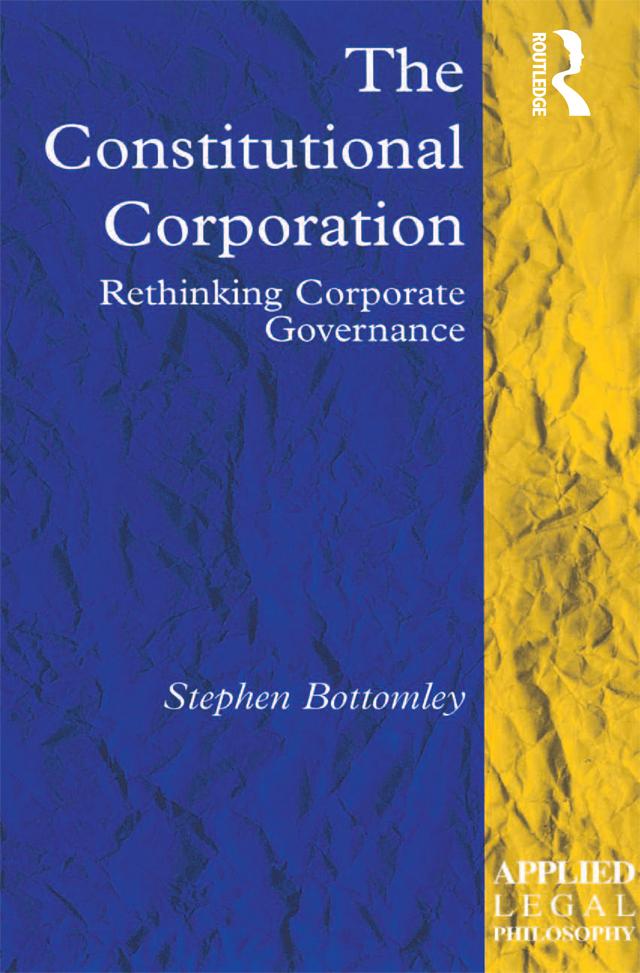
Corporate laws are based on the idea that the interests of shareholders should be the primary concern of company directors. However, some argue that the proper role for shareholders is to sit back and let the corporation's managers do their job, or that the pursuit of shareholders' interests detracts from the concerns of employees or victims of corporate wrongdoing or other stakeholders. Stephen Bottomley argues that instead of consigning shareholders to this passive role, they should be given opportunities to be active members of corporations. Corporations are constitutional arrangements rather than mere contractual agreements. They are decision-making organizations in which questions of process and structure are important. Thus, instead of using economic criteria such as efficiency as the sole measure for deciding what constitutes 'good' corporate governance, this book examines whether ideas of accountability, deliberation and contestability provide a valuable framework for assessing corporate structures and process and for encouraging greater shareholder participation.
Betal nemt med kort, Klarna, Apple Pay eller Google Pay. Ikke tilfreds? Du har altid 14 dages fortrydelsesret. Læs mere i vores vilkår. Har du spørgsmål, så send os en mail på hello@memmo.org.
Memmo gør det nemmere at studere – uanset hvor du er i verden. Hos os samler du dine kursusbøger og smarte studieværktøjer ét sted: resuméer, quizzer, podcasts og flashcards. Og så er der Ted, din studieven, der svarer på alt, du undrer dig over. Over 50 000 studerende studerer allerede her – bygget til at hjælpe dig med at lære hurtigere og stresse mindre.
Du kan måske også lide
Køb bogen0