
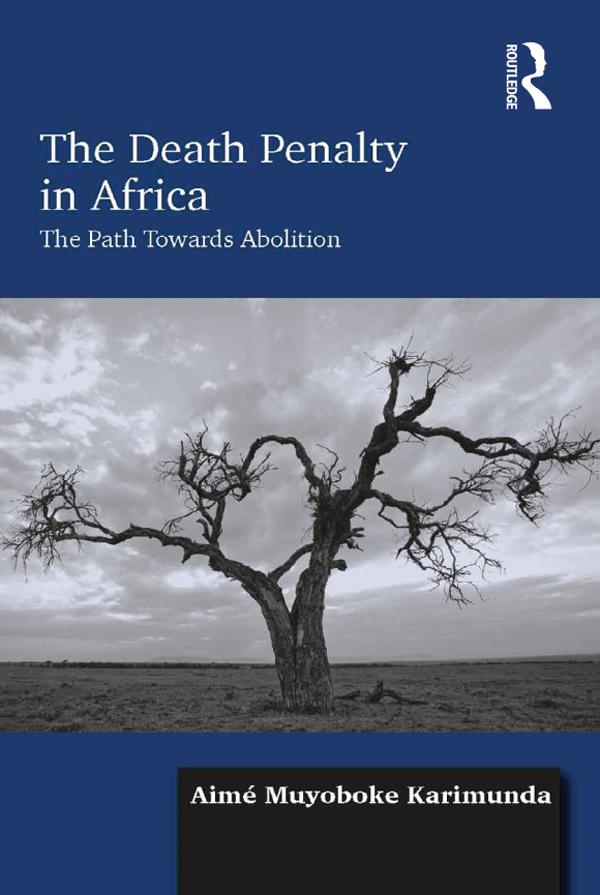
Human development is not simply about wealth and economic well-being, it is also dependent upon shared values that cherish the sanctity of human life. Using comparative methods, archival research and quantitative findings, this book explores the historical and cultural background of the death penalty in Africa, analysing the law and practice of the death penalty under European and Asian laws in Africa before independence. Showing progressive attitudes to punishment rooted in both traditional and modern concepts of human dignity, Aimé Muyoboke Karimunda assesses the ground on which the death penalty is retained today. Providing a full and balanced appraisal of the arguments, the book presents a clear and compelling case for the total abolition of the death penalty throughout Africa. This book is essential reading for human rights lawyers, legal anthropologists, historians, political analysts and anyone else interested in promoting democracy and the protection of fundamental human rights in Africa.
Betal nemt med kort, Klarna, Apple Pay eller Google Pay. Ikke tilfreds? Du har altid 14 dages fortrydelsesret. Læs mere i vores vilkår. Har du spørgsmål, så send os en mail på hello@memmo.org.
Memmo gør det nemmere at studere – uanset hvor du er i verden. Hos os samler du dine kursusbøger og smarte studieværktøjer ét sted: resuméer, quizzer, podcasts og flashcards. Og så er der Ted, din studieven, der svarer på alt, du undrer dig over. Over 50 000 studerende studerer allerede her – bygget til at hjælpe dig med at lære hurtigere og stresse mindre.
Du kan måske også lide
Køb bogen0