
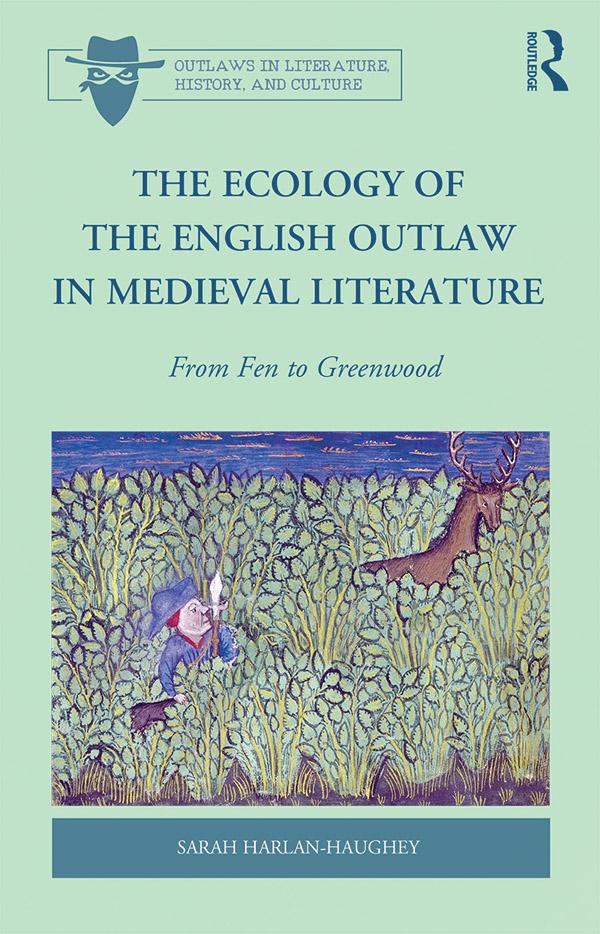
Arguing that outlaw narratives become particularly popular and poignant at moments of national ecological and political crisis, Sarah Harlan-Haughey examines the figure of the outlaw in Anglo-Saxon poetry and Old English exile lyrics such as Beowulf, works dealing with the life and actions of Hereward, the Anglo-Norman romance of Fulk Fitz Waryn, the Robin Hood ballads, and the Tale of Gamelyn. Although the outlaw's wilderness shelter changed dramatically from the menacing fens and forests of Anglo-Saxon England to the bright, known, and mapped greenwood of the late outlaw romances and ballads, Harlan-Haughey observes that the outlaw remained strongly animalistic, other, and liminal. His brutality points to a deep literary ambivalence towards wilderness and the animal, at the same time that figures such as the Anglo-Saxon resistance fighter Hereward, the brutal yet courtly Gamelyn, and Robin Hood often represent a lost England imagined as pristine and forested. In analyzing outlaw literature as a form of nature writing, Harlan-Haughey suggests that it often reveals more about medieval anxieties respecting humanity's place in nature than it does about the political realities of the period.
Betal nemt med kort, Klarna, Apple Pay eller Google Pay. Ikke tilfreds? Du har altid 14 dages fortrydelsesret. Læs mere i vores vilkår. Har du spørgsmål, så send os en mail på hello@memmo.org.
Memmo gør det nemmere at studere – uanset hvor du er i verden. Hos os samler du dine kursusbøger og smarte studieværktøjer ét sted: resuméer, quizzer, podcasts og flashcards. Og så er der Ted, din studieven, der svarer på alt, du undrer dig over. Over 50 000 studerende studerer allerede her – bygget til at hjælpe dig med at lære hurtigere og stresse mindre.