
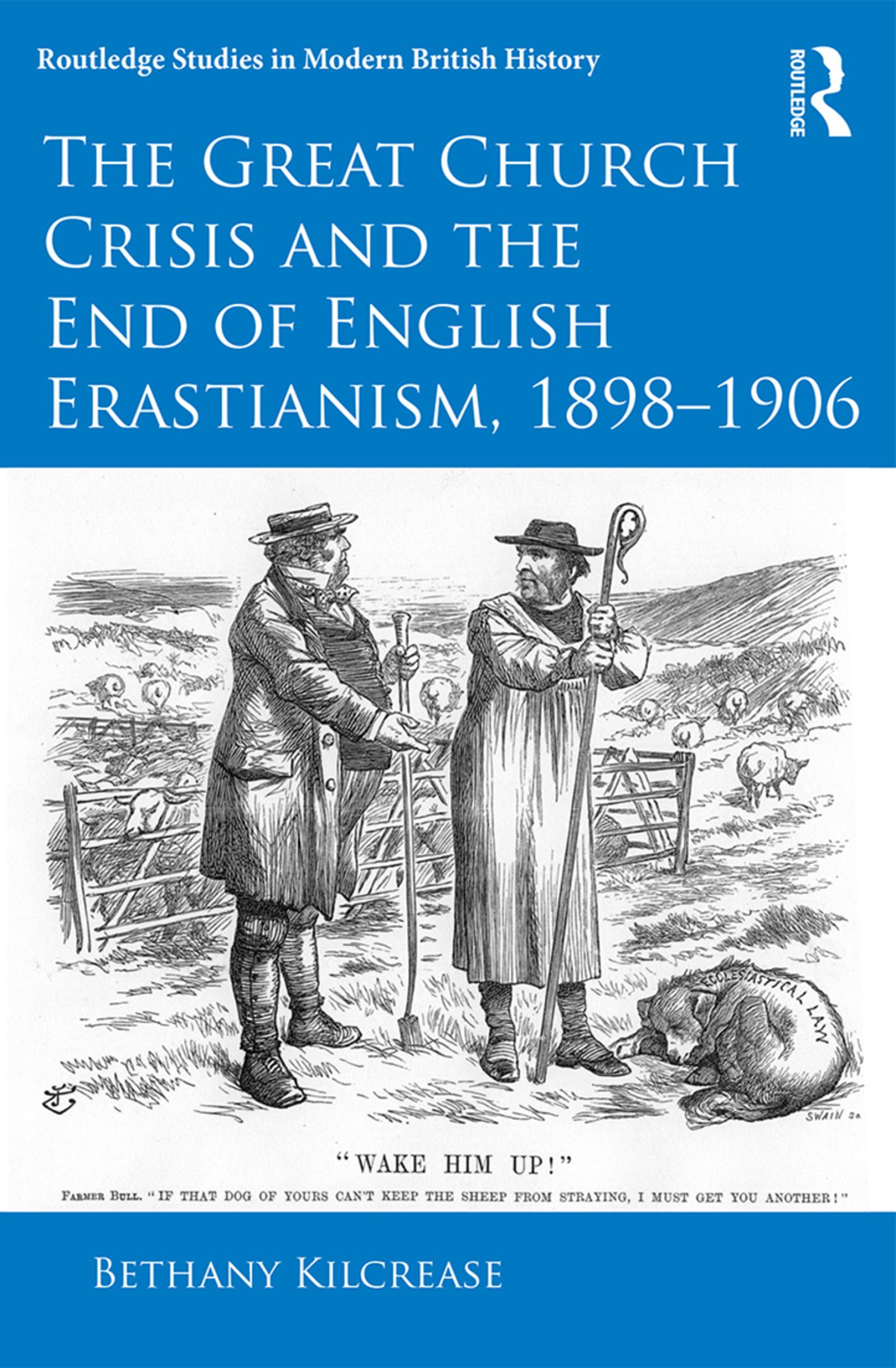
This book traces the history of the "Church Crisis", a conflict between the Protestant and Anglo-Catholic (Ritualist) parties within the Church of England between 1898 and 1906. During this period, increasing numbers of Britons embraced Anglo-Catholicism and even converted to Roman Catholicism. Consequent fears that Catholicism was undermining the "Protestant" heritage of the established church led to a moral panic.
The Crisis led to a temporary revival of Erastianism as protestant groups sought to stamp out Catholicism within the established church through legislation whilst Anglo-Catholics, who valued ecclesiastical autonomy, opposed any such attempts. The eventual victory of forces in favor of greater ecclesiastical autonomy ended parliamentary attempts to control church practice, sounding the death knell of Erastianism. Despite increased acknowledgment that religious concerns remained deep-seated around the turn of the century, historians have failed to recognize that this period witnessed a high point in Protestant-Catholic antagonism and a shift in the relationship between the established church and Parliament. Parliament’s increasing unwillingness to address ecclesiastical concerns in this period was not an example advancing political secularity. Rather, Parliament’s increased reluctance to engage with the Church of England illustrates the triumph of an anti-Erastian conception of church-state relations.
Betal nemt med kort, Klarna, Apple Pay eller Google Pay. Ikke tilfreds? Du har altid 14 dages fortrydelsesret. Læs mere i vores vilkår. Har du spørgsmål, så send os en mail på hello@memmo.org.
Memmo gør det nemmere at studere – uanset hvor du er i verden. Hos os samler du dine kursusbøger og smarte studieværktøjer ét sted: resuméer, quizzer, podcasts og flashcards. Og så er der Ted, din studieven, der svarer på alt, du undrer dig over. Over 50 000 studerende studerer allerede her – bygget til at hjælpe dig med at lære hurtigere og stresse mindre.