
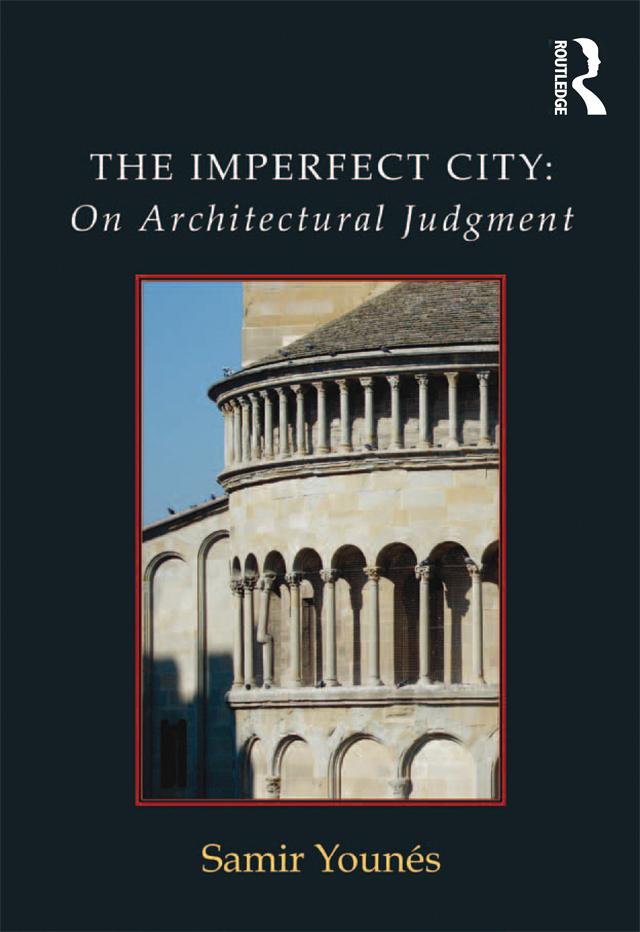
If architectural judgment were a city, a city of ideas and forms, then it is a very imperfect city. When architects judge the success or failure of a building, the range of ways and criteria which can be used for this evaluation causes many contentious and discordant arguments. Proposing that the increase in number and intensity of such arguments threatens to destabilize the very grounds upon which judgment is supposed to rest, this book examines architectural judgment in its historical, cultural, political, and psychological dimensions and their convergence on that most expressive part of architecture, namely: architectural character. It stresses the value of reasoned judgment in justifying architectural form -a judgment based on three sets of criteria: those criteria that are external to architecture, those that are internal to architecture, and those that pertain to the psychology of the architect as image-maker. External criteria include, philosophies of history or theories of modernity; internal criteria include architectural character and architectural composition; while the psychological criteria pertain to 'mimetic rivalry', or rivaling desires for the same architectural forms. Yet, although architectural conflicts can adversely influence judgment, they can at the same time, contribute to the advancement of architectural culture.
Betal nemt med kort, Klarna, Apple Pay eller Google Pay. Ikke tilfreds? Du har altid 14 dages fortrydelsesret. Læs mere i vores vilkår. Har du spørgsmål, så send os en mail på hello@memmo.org.
Memmo gør det nemmere at studere – uanset hvor du er i verden. Hos os samler du dine kursusbøger og smarte studieværktøjer ét sted: resuméer, quizzer, podcasts og flashcards. Og så er der Ted, din studieven, der svarer på alt, du undrer dig over. Over 50 000 studerende studerer allerede her – bygget til at hjælpe dig med at lære hurtigere og stresse mindre.
Du kan måske også lide
Køb bogen0