
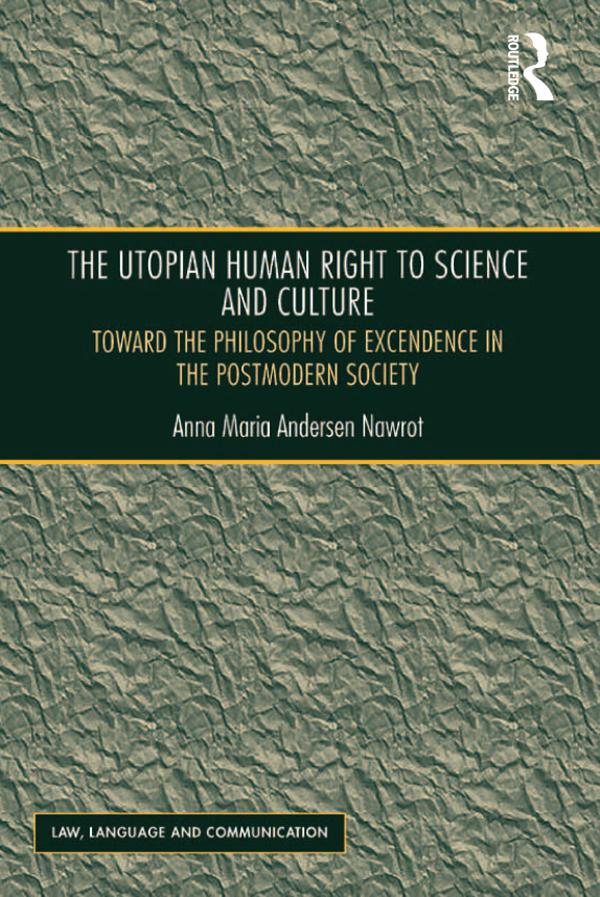
This book explores the question of whether the ideal right to science and culture exists. It proposes that the human right to science and culture is of a utopian character and argues for the necessity of the existence of such a right by developing a philosophical project situated in postmodernity, based on the assumption of ’thinking in terms of excendence’. The book brings a novel and critical approach to human rights in general and to the human right to science and culture in particular. It offers a new way of thinking about access to knowledge in the postanalogue, postmodern society. Inspired by twentieth-century critical theorists such as Levinas, Gadamer, Bauman and Habermas, the book begins by using excendence as a way of thinking about the individual, speech and text. It considers paradigms arising from postanalogue society, revealing the neglected normative content of the human right to science and culture and proposes a morality, dignity and solidarity situated in a postmodern context. Finally the book concludes by responding to questions on happiness, dignity and that which is social. Including an Annex which presents the author’s private project related to thinking in the context of the journey from ’myth to reason’, this book is of interest to researchers in the fields of philosophy and the theory of law, human rights, intellectual property and social theory.
Betal nemt med kort, Klarna, Apple Pay eller Google Pay. Ikke tilfreds? Du har altid 14 dages fortrydelsesret. Læs mere i vores vilkår. Har du spørgsmål, så send os en mail på hello@memmo.org.
Memmo gør det nemmere at studere – uanset hvor du er i verden. Hos os samler du dine kursusbøger og smarte studieværktøjer ét sted: resuméer, quizzer, podcasts og flashcards. Og så er der Ted, din studieven, der svarer på alt, du undrer dig over. Over 50 000 studerende studerer allerede her – bygget til at hjælpe dig med at lære hurtigere og stresse mindre.
Du kan måske også lide
Køb bogen0