
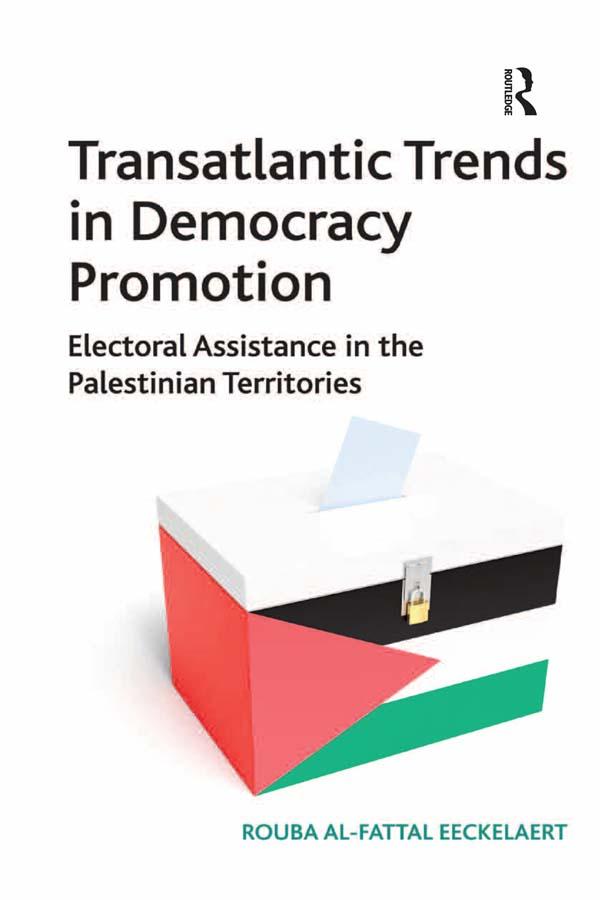
How did the EU, US, and Canada decide and implement their electoral assistance in the Palestinian Territories (PT)? Why did the EU, the US, and Canada embark on assisting the elections in the PT, and what factors influenced their electoral assistance? What lessons can be learned for other countries approaching elections after a long period of conflict? This book answers these questions and charts the process of electoral assistance with an in-depth analysis of each transatlantic actor's electoral assistance in the PT. It shows that, despite the many institutional and operational differences between the EU, the US, and Canada, the three actors do share common interests and influencing factors which often unify their response. The book also reveals the limitations facing electoral assistance and the implications of this on the sustainability, clarity, consistency, and responsiveness of the policy. In this systematic, comparative analysis of European, American and Canadian efforts to assist elections and transform governance in conflict zones Rouba Al-Fattal greatly advances the empirical knowledge of electoral assistance and provides the first steps needed to reform electoral assistance policy to cope with the challenges of the twenty-first century.
Betal nemt med kort, Klarna, Apple Pay eller Google Pay. Ikke tilfreds? Du har altid 14 dages fortrydelsesret. Læs mere i vores vilkår. Har du spørgsmål, så send os en mail på hello@memmo.org.
Memmo gør det nemmere at studere – uanset hvor du er i verden. Hos os samler du dine kursusbøger og smarte studieværktøjer ét sted: resuméer, quizzer, podcasts og flashcards. Og så er der Ted, din studieven, der svarer på alt, du undrer dig over. Over 50 000 studerende studerer allerede her – bygget til at hjælpe dig med at lære hurtigere og stresse mindre.
Du kan måske også lide
Køb bogen0