
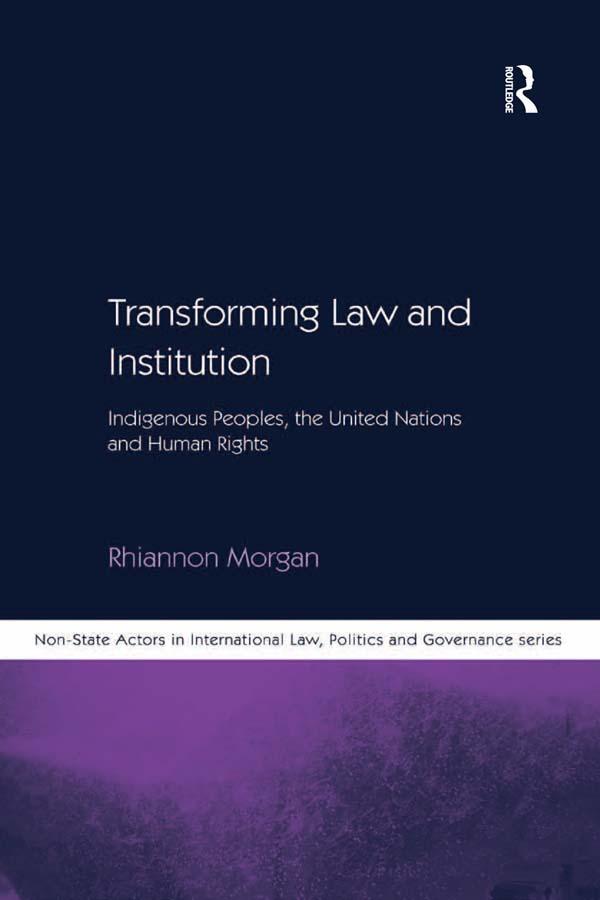
In the past thirty or so years, discussions of the status and rights of indigenous peoples have come to the forefront of the United Nations human rights agenda. During this period, indigenous peoples have emerged as legitimate subjects of international law with rights to exist as distinct peoples. At the same time, we have witnessed the establishment of a number of UN fora and mechanisms on indigenous issues, including the UN Permanent Forum on Indigenous Issues, all pointing to the importance that the UN has come to place on the promotion and protection of indigenous peoples' rights. Morgan describes, analyses, and evaluates the efforts of the global indigenous movement to engender changes in UN discourse and international law on indigenous peoples' rights and to bring about certain institutional developments reflective of a heightened international concern. By the same token, focusing on the interaction of the global indigenous movement with the UN system, this book examines the reverse influence, that is, the ways in which interacting with the UN system has influenced the claims, tactical repertoires, and organizational structures of the movement.
Betal nemt med kort, Klarna, Apple Pay eller Google Pay. Ikke tilfreds? Du har altid 14 dages fortrydelsesret. Læs mere i vores vilkår. Har du spørgsmål, så send os en mail på hello@memmo.org.
Memmo gør det nemmere at studere – uanset hvor du er i verden. Hos os samler du dine kursusbøger og smarte studieværktøjer ét sted: resuméer, quizzer, podcasts og flashcards. Og så er der Ted, din studieven, der svarer på alt, du undrer dig over. Over 50 000 studerende studerer allerede her – bygget til at hjælpe dig med at lære hurtigere og stresse mindre.
Du kan måske også lide
Køb bogen0