
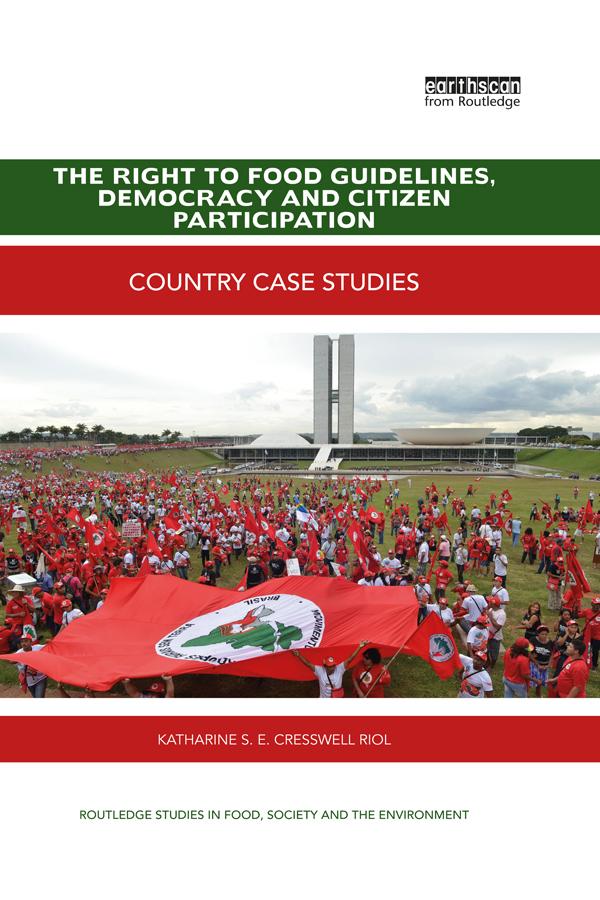
It is now more than a decade since the Right to Food Guidelines were negotiated, agreed and adopted internationally by states. This book provides a review of its objectives and the extent of success of its implementation. The focus is on the first key guideline – "Democracy, good governance, human rights and the rule of law" – with an emphasis on civil society participation in global food governance. The five BRICS countries (Brazil, Russia, India, China and South Africa) are presented as case studies: representing major emerging economies, they blur the line between the Global North and South, and exhibit different levels of human rights realisation.
The book first provides an overview of the right to adequate food, accountability and democracy, and an introduction to the history of the development of the right to adequate food and the Right to Food Guidelines. It presents a historical synopsis of each of the BRICS states’ experiences with the right to adequate food and an analysis of their related periodic reporting to the Committee on Economic, Social and Cultural Rights, as well as a specific assessment of their progress in regard to the first guideline. The discussion then focuses on the effectiveness of the Right to Food Guidelines as both a policy-making and monitoring tool, based on the analysis of the guidelines and the BRICS states.
Betal nemt med kort, Klarna, Apple Pay eller Google Pay. Ikke tilfreds? Du har altid 14 dages fortrydelsesret. Læs mere i vores vilkår. Har du spørgsmål, så send os en mail på hello@memmo.org.
Memmo gør det nemmere at studere – uanset hvor du er i verden. Hos os samler du dine kursusbøger og smarte studieværktøjer ét sted: resuméer, quizzer, podcasts og flashcards. Og så er der Ted, din studieven, der svarer på alt, du undrer dig over. Over 50 000 studerende studerer allerede her – bygget til at hjælpe dig med at lære hurtigere og stresse mindre.