
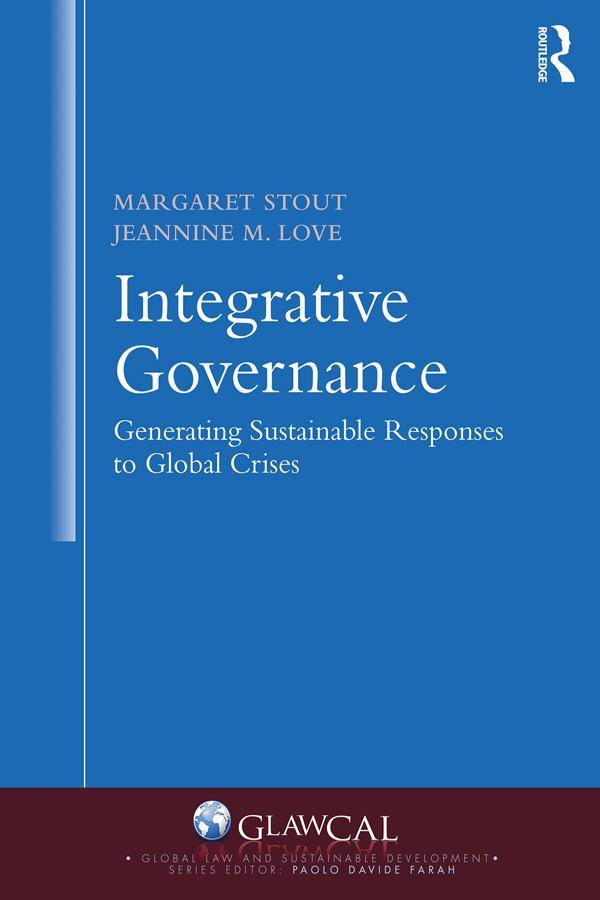
Dominant governance theories are drawn primarily from Euro-American sources, including emergent theories of network and collaborative governance. The authors contest this narrow view and seek a more globally inclusive and transdisciplinary perspective, arguing such an approach is more fruitful in addressing the wicked problems of sustainability—including social, economic, and environmental crises. This book thus offers and affirms an innovative governance approach that may hold more promise as a "universal" framework that is not colonizing in nature due to its grounding in relational process assumptions and practices. Using a comprehensive Governance Typology that encompasses ontological assumptions, psychosocial theory, epistemological concepts, belief systems, ethical concepts, political theory, economic theory, and administrative theory, the authors delve deeply into underlying philosophical commitments and carry them into practice through an approach they call Integrative Governance. The authors consider ways this approach to radical self-governance is already being implemented in the prefigurative politics of contemporary social movements, and they invite scholars and activists to: imagine governance in contexts of social, economic, and environmental interconnectedness; to use the ideal-type as an evaluative tool against which to measure practice; and to pursue paradigmatic change through collaborative praxis.
Betal nemt med kort, Klarna, Apple Pay eller Google Pay. Ikke tilfreds? Du har altid 14 dages fortrydelsesret. Læs mere i vores vilkår. Har du spørgsmål, så send os en mail på hello@memmo.org.
Memmo gør det nemmere at studere – uanset hvor du er i verden. Hos os samler du dine kursusbøger og smarte studieværktøjer ét sted: resuméer, quizzer, podcasts og flashcards. Og så er der Ted, din studieven, der svarer på alt, du undrer dig over. Over 50 000 studerende studerer allerede her – bygget til at hjælpe dig med at lære hurtigere og stresse mindre.