
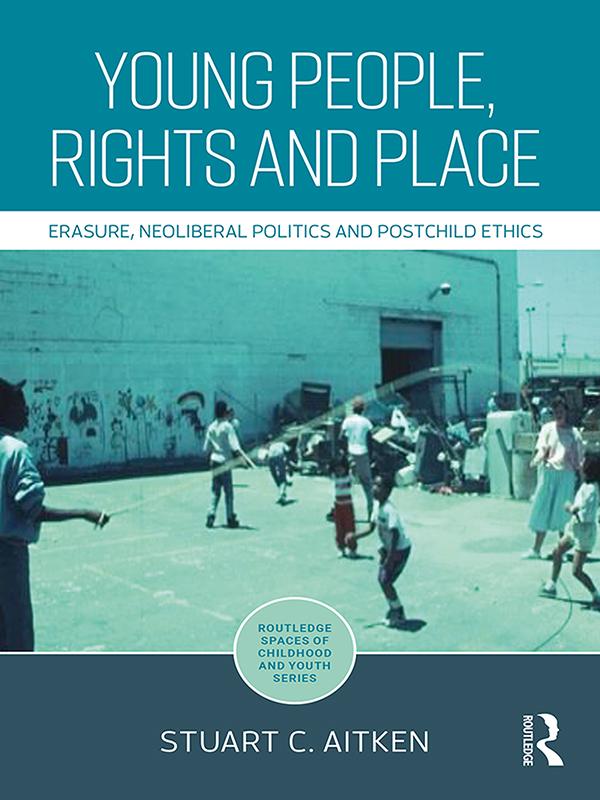
Concern is growing about children’s rights and the curtailment of those rights through the excesses of neoliberal governance. This book discusses children’s spatial and citizenship rights, and the ways young people and their families push against diminished rights.
Armed initially with theoretical concerns about the construction of children through the political status quo and the ways youth rights are spatially segregated, the book begins with a disarmingly simple supposition: Young people have the right to make and remake their spaces and, as a consequence, themselves. This book de-centers monadic ideas of children in favor of a post-humanist perspective, which embraces the radical relationality of children as more-than-children/more-than-human. Its empirical focus begins with the struggles of Slovenian Izbrisani (‘erased’) youth from 1992 to the present day and reaches out to child rights and youth activists elsewhere in the world with examples from South America, Eastern Europe and the USA. The author argues that universal child rights have not worked and pushes for a more radical, sustainable ethics, which dares to admit that children’s humanity is something more than we, as adults, can imagine.
Chapters in this groundbreaking contribution will be of interest to students, researchers and practitioners in the social sciences, humanities and public policy.
Betal nemt med kort, Klarna, Apple Pay eller Google Pay. Ikke tilfreds? Du har altid 14 dages fortrydelsesret. Læs mere i vores vilkår. Har du spørgsmål, så send os en mail på hello@memmo.org.
Memmo gør det nemmere at studere – uanset hvor du er i verden. Hos os samler du dine kursusbøger og smarte studieværktøjer ét sted: resuméer, quizzer, podcasts og flashcards. Og så er der Ted, din studieven, der svarer på alt, du undrer dig over. Over 50 000 studerende studerer allerede her – bygget til at hjælpe dig med at lære hurtigere og stresse mindre.