
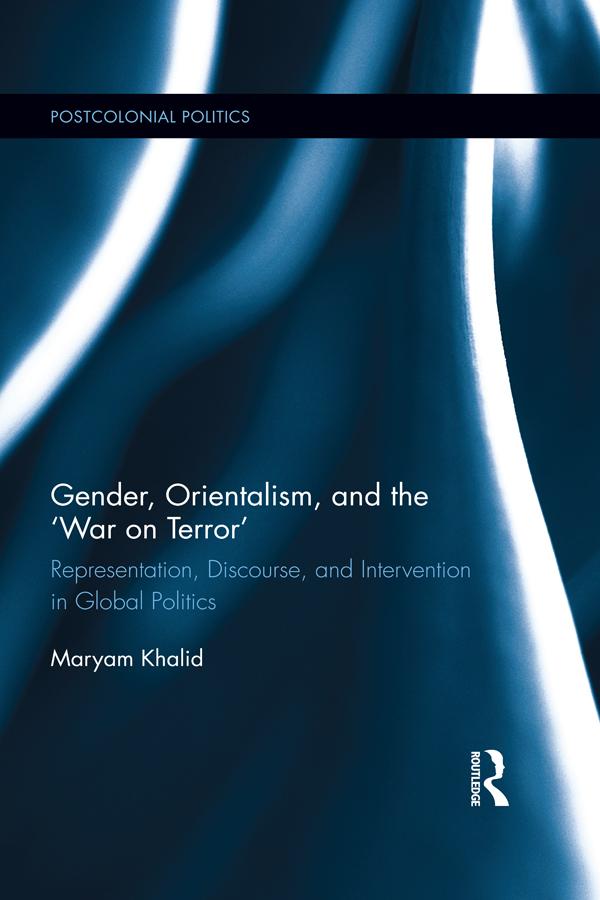
This book offers an accessible and timely analysis of the ‘War on Terror’, based on an innovative approach to a broad range of theoretical and empirical research. It uses ‘gendered orientalism’ as a lens through which to read the relationship between the George W. Bush administration, gendered and racialized military intervention, and global politics.
Khalid argues that legitimacy, power, and authority in global politics, and the ‘War on Terror’ specifically, are discursively constructed through representations that are gendered and racialized, and often orientalist. Looking at the ways in which ‘official’ US ‘War on Terror’ discourse enabled military intervention into Afghanistan and Iraq, the book takes a postcolonial feminist approach to broaden the scope of critical analyses of the ‘War on Terror’ and reflect on the gendered and racial underpinnings of key relations of power within contemporary global politics.
This book is a unique, innovative and significant analysis of the operation of race, orientalism, and gender in global politics, and the ‘War on Terror’ specifically. It will be of great interest to scholars and graduates interested in gender politics, development, humanitarian intervention, international (global) relations, Middle East politics, security, and US foreign policy.
Betal nemt med kort, Klarna, Apple Pay eller Google Pay. Ikke tilfreds? Du har altid 14 dages fortrydelsesret. Læs mere i vores vilkår. Har du spørgsmål, så send os en mail på hello@memmo.org.
Memmo gør det nemmere at studere – uanset hvor du er i verden. Hos os samler du dine kursusbøger og smarte studieværktøjer ét sted: resuméer, quizzer, podcasts og flashcards. Og så er der Ted, din studieven, der svarer på alt, du undrer dig over. Over 50 000 studerende studerer allerede her – bygget til at hjælpe dig med at lære hurtigere og stresse mindre.