
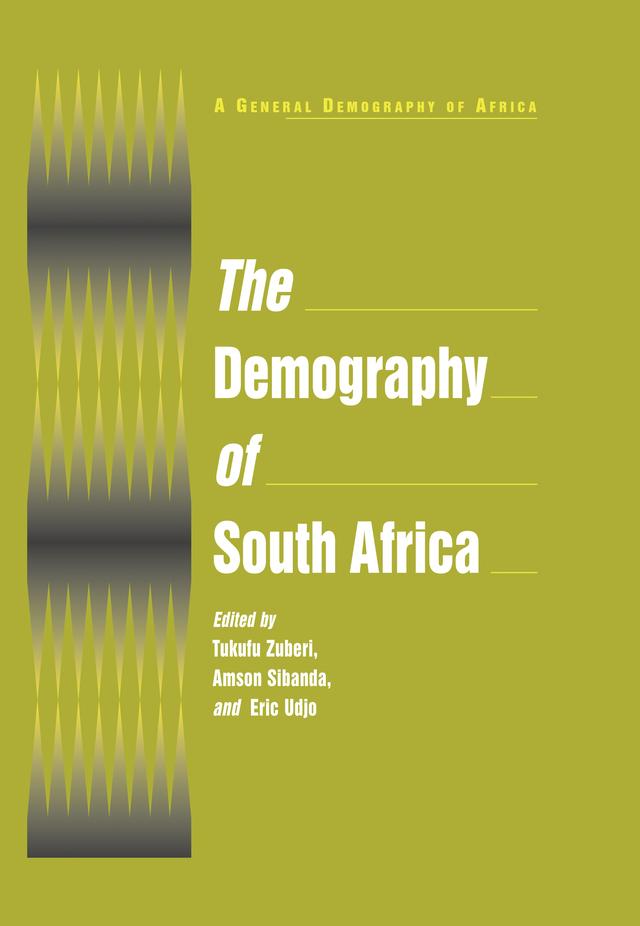
This groundbreaking study of South Africa provides a unique look at the interplay of demographic, social and economic processes in a society undergoing rapid change as a result of the collapse of apartheid. It uses data from the first post-apartheid census as the basis for analysis of fertility, mortality within the context of HIV/AIDS, migration, education, employment, and household structure. These census data are complemented by large-scale household surveys and data from a partial registration system to study the relationships among various demographic, economic, and social phenomena. For the first time the demographic consequences of both the longer-term impact of apartheid policies and the policies of the new South Africa are examined and compared. This comprehensive reference links the demographic behavior of South Africa's various population groups to social, economic, and political inequalities created by policies of separate and unequal development. Prepared under the auspices of the Population Studies Center at the University of Pennsylvania, it is an essential resource for all scholars and practitioners in the field.
Betal nemt med kort, Klarna, Apple Pay eller Google Pay. Ikke tilfreds? Du har altid 14 dages fortrydelsesret. Læs mere i vores vilkår. Har du spørgsmål, så send os en mail på hello@memmo.org.
Memmo gør det nemmere at studere – uanset hvor du er i verden. Hos os samler du dine kursusbøger og smarte studieværktøjer ét sted: resuméer, quizzer, podcasts og flashcards. Og så er der Ted, din studieven, der svarer på alt, du undrer dig over. Over 50 000 studerende studerer allerede her – bygget til at hjælpe dig med at lære hurtigere og stresse mindre.
Du kan måske også lide
Køb bogen0