
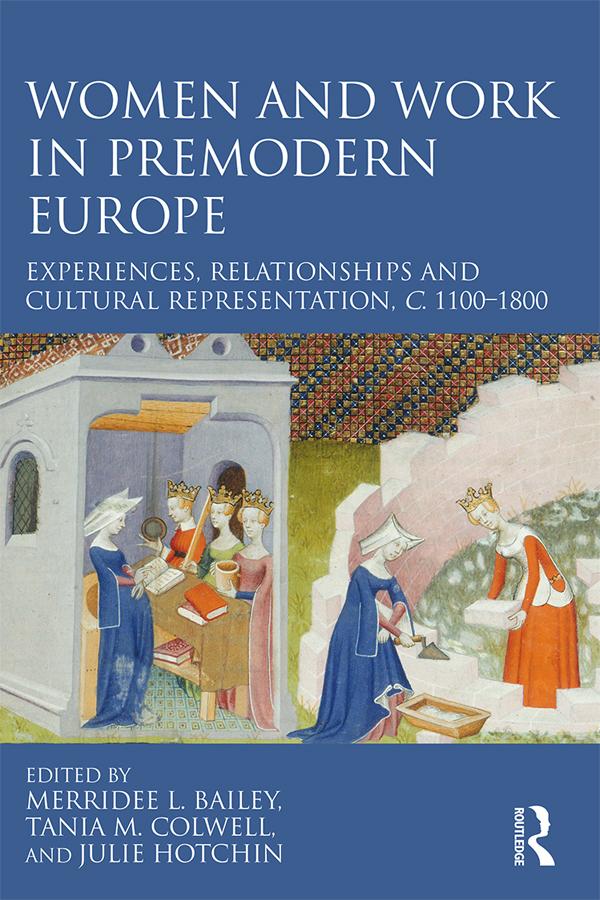
This book re-evaluates and extends understandings about how work was conceived and what it could entail for women in the premodern period in Europe from c. 1100 to c. 1800. It does this by building on the impressive growth in literature on women’s working experiences, and by adopting new interpretive approaches that expand received assumptions about what constituted 'work' for women. While attention to the diversity of women’s contributions to the economy has done much to make the breadth of women’s experiences of labour visible, this volume takes a more expansive conceptual approach to the notion of work and considers the social and cultural dimensions in which activities were construed and valued as work. This interdisciplinary collection thus advances concepts of work that encompass cultural activities in addition to more traditional economic understandings of work as employment or labour for production. The chapters reconceptualise and explore work for women by asking how the working lives of historical women were enacted and represented, and analyse the relationships that shaped women’s experiences of work across the European premodern period.
Betal nemt med kort, Klarna, Apple Pay eller Google Pay. Ikke tilfreds? Du har altid 14 dages fortrydelsesret. Læs mere i vores vilkår. Har du spørgsmål, så send os en mail på hello@memmo.org.
Memmo gør det nemmere at studere – uanset hvor du er i verden. Hos os samler du dine kursusbøger og smarte studieværktøjer ét sted: resuméer, quizzer, podcasts og flashcards. Og så er der Ted, din studieven, der svarer på alt, du undrer dig over. Over 50 000 studerende studerer allerede her – bygget til at hjælpe dig med at lære hurtigere og stresse mindre.