
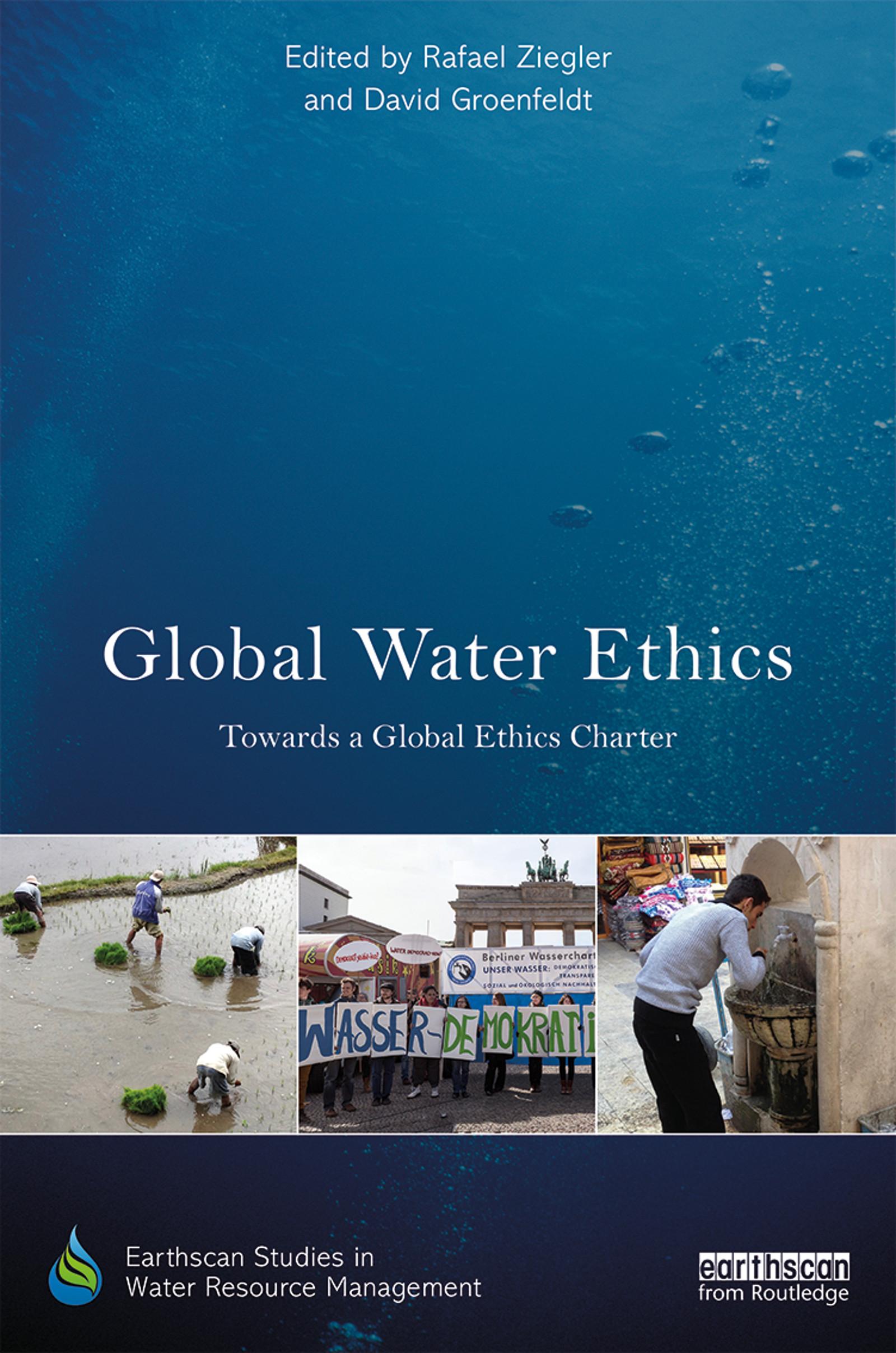
Scholarly interest in water ethics is increasing, motivated by the urgency of climate change, water scarcity, privatization and conflicts over water resources. Water ethics can provide both conceptual perspectives and practical methodologies for identifying outcomes which are environmentally sustainable and socially just. This book assesses the implications of ongoing research in framing a new discipline of water ethics in practice.
Contributions consider the difficult ethical and epistemological questions of water ethics in a global context, as well as offering local, empirical perspectives. Case study chapters focus on a range of countries including Canada, China, Germany, India, South Africa and the USA. The respective insights are brought together in the final section concerning the practical project of a universal water ethics charter, alongside theoretical questions about the legitimacy of a global water ethics.
Overall the book provides a stimulating examination of water ethics in theory and practice, relevant to academics and professionals in the fields of water resource management and governance, environmental ethics, geography, law and political science.
Betal nemt med kort, Klarna, Apple Pay eller Google Pay. Ikke tilfreds? Du har altid 14 dages fortrydelsesret. Læs mere i vores vilkår. Har du spørgsmål, så send os en mail på hello@memmo.org.
Memmo gør det nemmere at studere – uanset hvor du er i verden. Hos os samler du dine kursusbøger og smarte studieværktøjer ét sted: resuméer, quizzer, podcasts og flashcards. Og så er der Ted, din studieven, der svarer på alt, du undrer dig over. Over 50 000 studerende studerer allerede her – bygget til at hjælpe dig med at lære hurtigere og stresse mindre.