
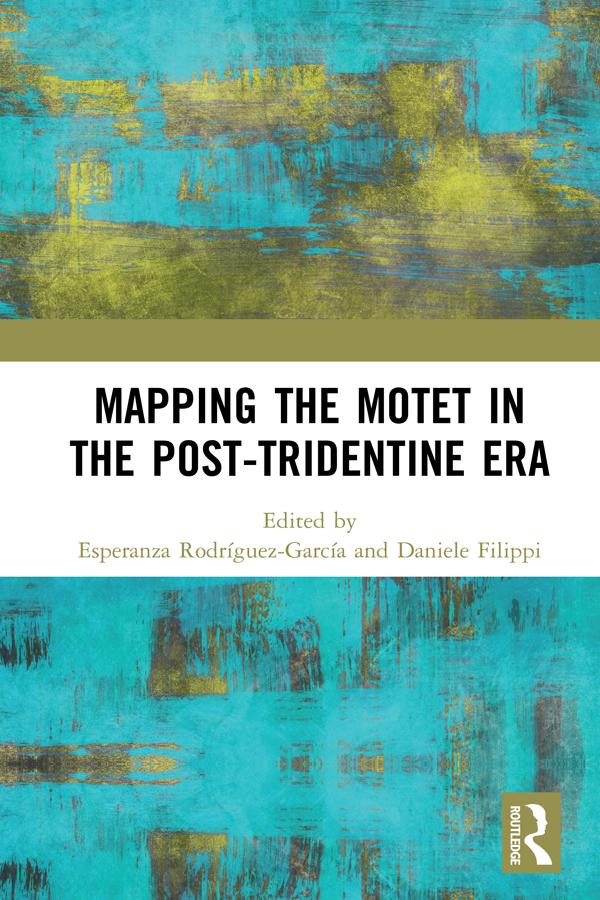
Mapping the Motet in the Post-Tridentine Era provides new dimensions to the discussion of the immense corpus of polyphonic motets produced and performed in the decades following the end of the Council of Trent in 1563. Beyond the genre’s rich connections with contemporary spiritual life and religious experience, the motet is understood here as having a multifaceted life in transmission, performance and reception. By analysing the repertoire itself, but also by studying its material life in books and accounts, in physical places and concrete sonic environments, and by investigating the ways in which the motet was listened to and talked about by contemporaries, the eleven chapters in this book redefine the cultural role of the genre. The motet, thanks to its own protean nature, not bound to any given textual, functional or compositional constraint, was able to convey cultural meanings powerfully, give voice to individual and collective identities, cross linguistic and confessional divides, and incarnate a model of learned and highly expressive musical composition. Case studies include considerations of composers (Palestrina, Victoria, Lasso), cities (Seville and Granada, Milan), books (calendrically ordered collections, non-liturgical music books) and special portions of the repertoire (motets pro defunctis, instrumental intabulations).
Betal nemt med kort, Klarna, Apple Pay eller Google Pay. Ikke tilfreds? Du har altid 14 dages fortrydelsesret. Læs mere i vores vilkår. Har du spørgsmål, så send os en mail på hello@memmo.org.
Memmo gør det nemmere at studere – uanset hvor du er i verden. Hos os samler du dine kursusbøger og smarte studieværktøjer ét sted: resuméer, quizzer, podcasts og flashcards. Og så er der Ted, din studieven, der svarer på alt, du undrer dig over. Over 50 000 studerende studerer allerede her – bygget til at hjælpe dig med at lære hurtigere og stresse mindre.