
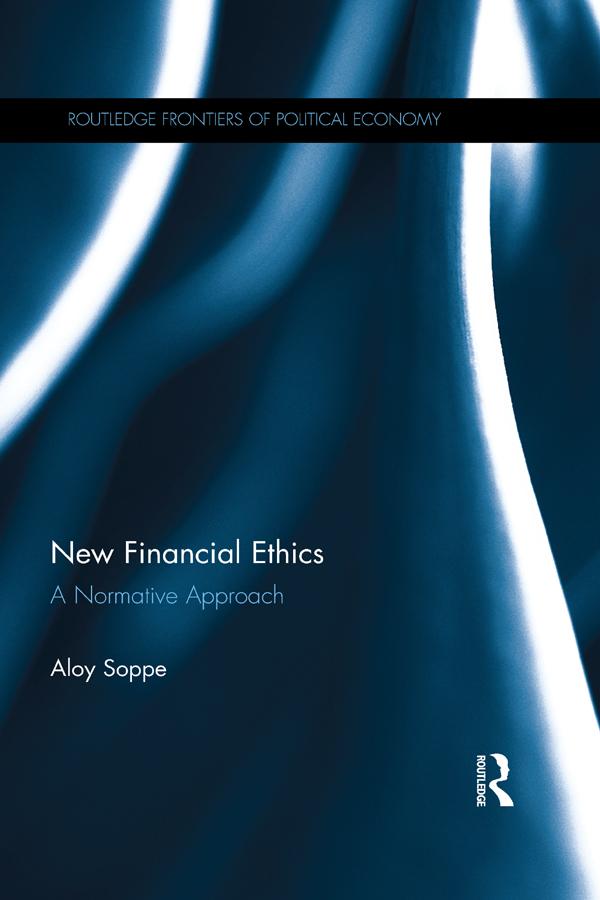
Following the internationalisation, globalisation and deregulation of the financial market over the last few decades, the financial sector has evolved from a servicing industry into an initiating and leading sector in the international industrialised economy. The power of the financial sector, including Credit Rating Agencies, determines the creditworthiness of companies and countries. Today’s financial sector dominates instead of serving the real economy, which puts substantial pres - sure on all the agencies involved, not least the banks, to make the profits that will drive economic growth. As a result of this pressure, moral conduct in the financial sector has been put under severe strain.
This book examines the experience of the recent financial crisis and argues that a firmer ethical grounding for the financial sector is required to prevent the crisis being repeated. The book offers a model for making judgements on financial markets, institutions and products. The model is built on seven major criteria which are examined in depth: Justice, Nature, Sustainability, Legality, Risk and Return, the Stakeholder model and Monism. This multidisciplinary approach integrates philosophy, economics and law to arrive at a new normative approach to financial ethics.
This book is a must-read for finance students at academic levels but also for professionals in the financial sector, who can be helped by implementing the model of NFE in solving financial dilemmas.
Betal nemt med kort, Klarna, Apple Pay eller Google Pay. Ikke tilfreds? Du har altid 14 dages fortrydelsesret. Læs mere i vores vilkår. Har du spørgsmål, så send os en mail på hello@memmo.org.
Memmo gør det nemmere at studere – uanset hvor du er i verden. Hos os samler du dine kursusbøger og smarte studieværktøjer ét sted: resuméer, quizzer, podcasts og flashcards. Og så er der Ted, din studieven, der svarer på alt, du undrer dig over. Over 50 000 studerende studerer allerede her – bygget til at hjælpe dig med at lære hurtigere og stresse mindre.