
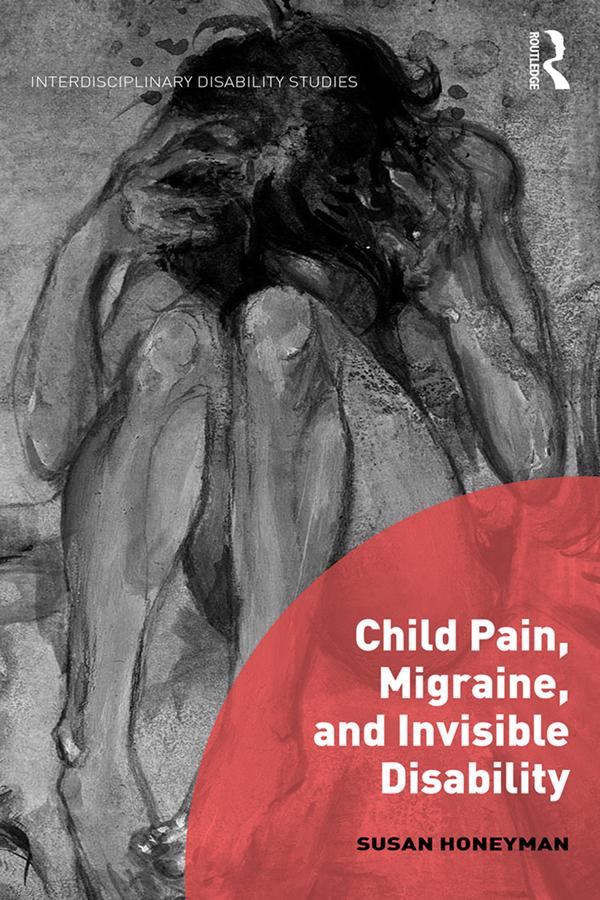
In the twenty-first century there is increasing global recognition of pain relief as a basic human right. However, as Susan Honeyman argues in this new take on child pain and invisible disability, such a belief has historically been driven by adult, ideological needs, whereas the needs of children in pain have traditionally been marginalised or overlooked in comparison.
Examining migraines in children and the socially disabling effects that chronic pain can have, this book uses medical, political and cultural discourse to convey a sense of invisible disability in children with migraine and its subsequent oppression within educational and medical policy. The book is supported by authentic migraineurs’ experiences and first-hand interviews as well as testimonials from a range of historical, literary, and medical sources never combined in a child-centred context before. Representations of child pain and lifespan migraine within literature, art and popular culture are also pulled together in order to provide an interdisciplinary guide to those wanting to understand migraine in children and the identity politics of disability more fully.
Child Pain, Migraine, and Invisible Disability will appeal to scholars in childhood studies, children’s rights, literary and visual culture, disability studies and medical humanities. It will also be of interest to anyone who has suffered from migraines or has cared for children affected by chronic pain.
Betal nemt med kort, Klarna, Apple Pay eller Google Pay. Ikke tilfreds? Du har altid 14 dages fortrydelsesret. Læs mere i vores vilkår. Har du spørgsmål, så send os en mail på hello@memmo.org.
Memmo gør det nemmere at studere – uanset hvor du er i verden. Hos os samler du dine kursusbøger og smarte studieværktøjer ét sted: resuméer, quizzer, podcasts og flashcards. Og så er der Ted, din studieven, der svarer på alt, du undrer dig over. Over 50 000 studerende studerer allerede her – bygget til at hjælpe dig med at lære hurtigere og stresse mindre.