
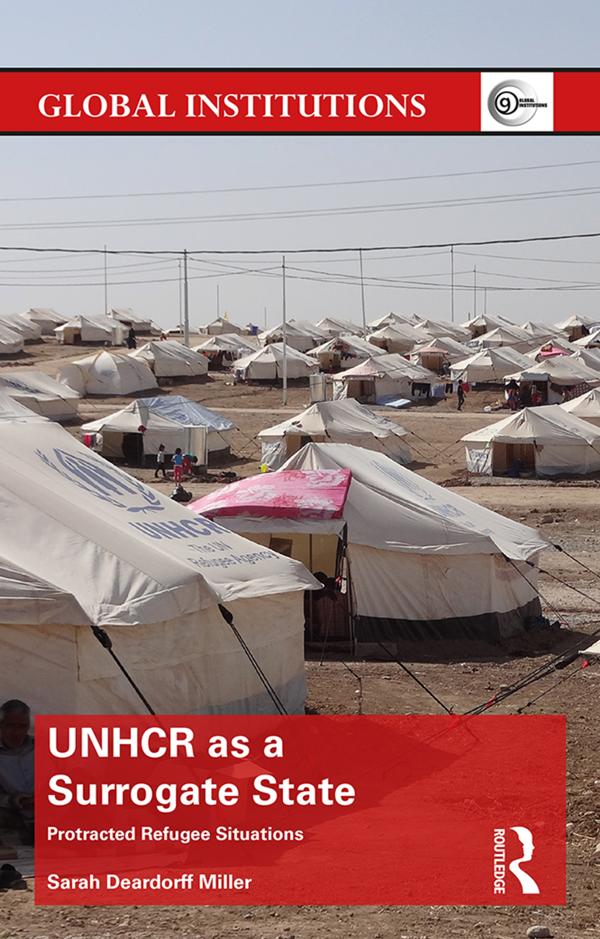
International organizations (IOs) that focus on refugees are finding themselves spread increasingly thin. As the scale of displacement reaches historic levels—protracted refugee situations now average 26 years—organizations are staying for years on end, often working well beyond their original mandates. In some cases, IOs may even act as a substitute for the state. This book considers the conditions under which surrogacy occurs and what it means for the organization’s influence on the state. It looks specifically at the United Nations High Commissioner for Refugees (UNHCR) as a surrogate state in protracted refugee situations in Kenya, Tanzania, and Uganda.
Drawing on international relations literature and empirical studies of UNHCR, Miller asks how and when UNHCR takes on surrogacy, and what effect this has on its ability to influence how a host state treats refugees. The book develops a framework for understanding IOs at the domestic level and presents a counterintuitive finding: IO surrogacy actually leads to less influence on the state. In other words, where UNHCR behaves like a state, it is less able to influence a host state’s refugee policies.
UNHCR provides an excellent example of an IO working on multiple levels, making this book of great interest to practitioners and policymakers working on refugee-related issues, and scholars of forced migration, international relations, international organizations, and UNHCR.
Betal nemt med kort, Klarna, Apple Pay eller Google Pay. Ikke tilfreds? Du har altid 14 dages fortrydelsesret. Læs mere i vores vilkår. Har du spørgsmål, så send os en mail på hello@memmo.org.
Memmo gør det nemmere at studere – uanset hvor du er i verden. Hos os samler du dine kursusbøger og smarte studieværktøjer ét sted: resuméer, quizzer, podcasts og flashcards. Og så er der Ted, din studieven, der svarer på alt, du undrer dig over. Over 50 000 studerende studerer allerede her – bygget til at hjælpe dig med at lære hurtigere og stresse mindre.