
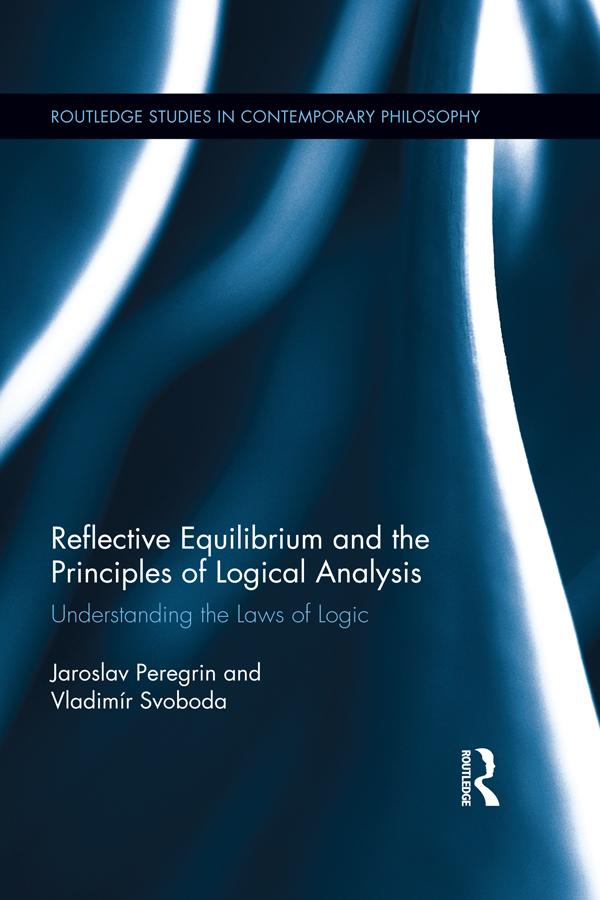
This book offers a comprehensive account of logic that addresses fundamental issues concerning the nature and foundations of the discipline. The authors claim that these foundations can not only be established without the need for strong metaphysical assumptions, but also without hypostasizing logical forms as specific entities. They present a systematic argument that the primary subject matter of logic is our linguistic interaction rather than our private reasoning and it is thus misleading to see logic as revealing "the laws of thought". In this sense, fundamental logical laws are implicit to our "language games" and are thus more similar to social norms than to the laws of nature. Peregrin and Svoboda also show that logical theories, despite the fact that they rely on rules implicit to our actual linguistic practice, firm up these rules and make them explicit. By carefully scrutinizing the project of logical analysis, the authors demonstrate that logical rules can be best seen as products of the so called reflective equilibrium. They suggest that we can profit from viewing languages as "inferential landscapes" and logicians as "geographers" who map them and try to pave safe routes through them. This book is an essential resource for scholars and researchers engaged with the foundations of logical theories and the philosophy of language.
Betal nemt med kort, Klarna, Apple Pay eller Google Pay. Ikke tilfreds? Du har altid 14 dages fortrydelsesret. Læs mere i vores vilkår. Har du spørgsmål, så send os en mail på hello@memmo.org.
Memmo gør det nemmere at studere – uanset hvor du er i verden. Hos os samler du dine kursusbøger og smarte studieværktøjer ét sted: resuméer, quizzer, podcasts og flashcards. Og så er der Ted, din studieven, der svarer på alt, du undrer dig over. Over 50 000 studerende studerer allerede her – bygget til at hjælpe dig med at lære hurtigere og stresse mindre.