
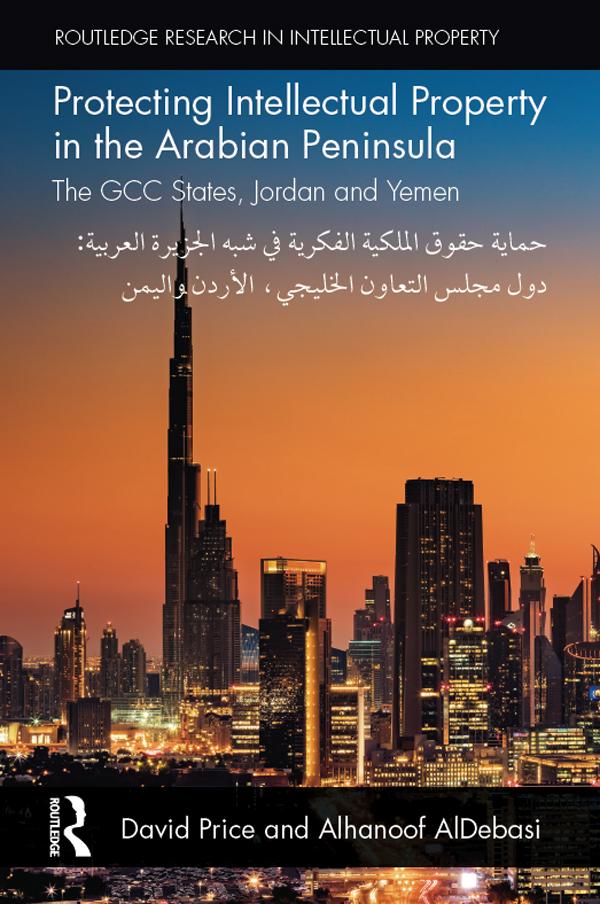
This work examines the endeavours of the Arabian Peninsula States – namely the Gulf Cooperation Council member States of Bahrain, Kuwait, Oman, Qatar Saudi Arabia and the UAE, as well as Jordan and Yemen as prospective GCC members – in establishing national intellectual property protection regimes which both meet their international treaty obligations and are also congruent with their domestic policy objectives. It uses the WTO’s TRIPS Agreement of 1995 as the universal benchmark against which the region’s laws are assessed. The challenges faced by the States in enforcing their intellectual property laws receive particular attention.
Protecting Intellectual Property in the Arabian Peninsula considers the changing nature of the States’ intellectual property laws since 1995. It argues that the decade immediately following the TRIPS Agreement was marked by a period of foreign forces shaping or influencing the character of the States’ intellectual property legislative regimes, primarily through multilateral or bilateral trade-based agreements. The second and current decade, however, see a significant shift away from foreign influences and a move towards domestic and regional imperatives and initiatives taking over.
The work also examines regional initiatives for the protection of traditional knowledge and cultural heritage, as areas of intellectual property which fall outside the parameters of the TRIPS Agreement, but which are of significant concern to the States and other developing countries, and to which they are giving increasing attention in terms of providing proper protection.
Betal nemt med kort, Klarna, Apple Pay eller Google Pay. Ikke tilfreds? Du har altid 14 dages fortrydelsesret. Læs mere i vores vilkår. Har du spørgsmål, så send os en mail på hello@memmo.org.
Memmo gør det nemmere at studere – uanset hvor du er i verden. Hos os samler du dine kursusbøger og smarte studieværktøjer ét sted: resuméer, quizzer, podcasts og flashcards. Og så er der Ted, din studieven, der svarer på alt, du undrer dig over. Over 50 000 studerende studerer allerede her – bygget til at hjælpe dig med at lære hurtigere og stresse mindre.