
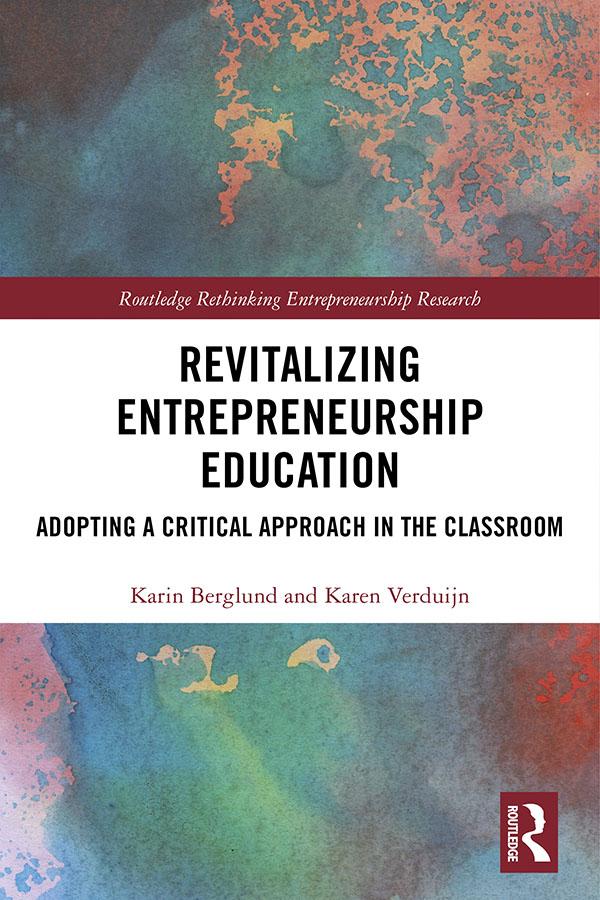
Within mainstream scholarship, it’s assumed without question that entrepreneurship and entrepreneurship education are desirable and positive economic activities. Drawing on a wide range of theoretical approaches and political-philosophical perspectives, critical entrepreneurship studies has emerged to ask the questions which this assumption obscures.
Students of entrepreneurship need to understand why and how entrepreneurship is seen as a moral force which can solve social problems or protect the environment, or even to tackle political problems. It is time to evaluate how such contributions and insights have entered our classrooms. How much – if any – critical discussion and insight enters our classrooms? How do we change when students demand to be taught "how to do it", not to be critical or reflexive?
If educators are to bring alternative perspectives into the classroom, it will entail a new way of thinking. There is a need to share ideas and practical approaches, and that is what the contributions to this volume aim to do and to illuminate new ways forward in entrepreneurship education.
Betal nemt med kort, Klarna, Apple Pay eller Google Pay. Ikke tilfreds? Du har altid 14 dages fortrydelsesret. Læs mere i vores vilkår. Har du spørgsmål, så send os en mail på hello@memmo.org.
Memmo gør det nemmere at studere – uanset hvor du er i verden. Hos os samler du dine kursusbøger og smarte studieværktøjer ét sted: resuméer, quizzer, podcasts og flashcards. Og så er der Ted, din studieven, der svarer på alt, du undrer dig over. Over 50 000 studerende studerer allerede her – bygget til at hjælpe dig med at lære hurtigere og stresse mindre.