
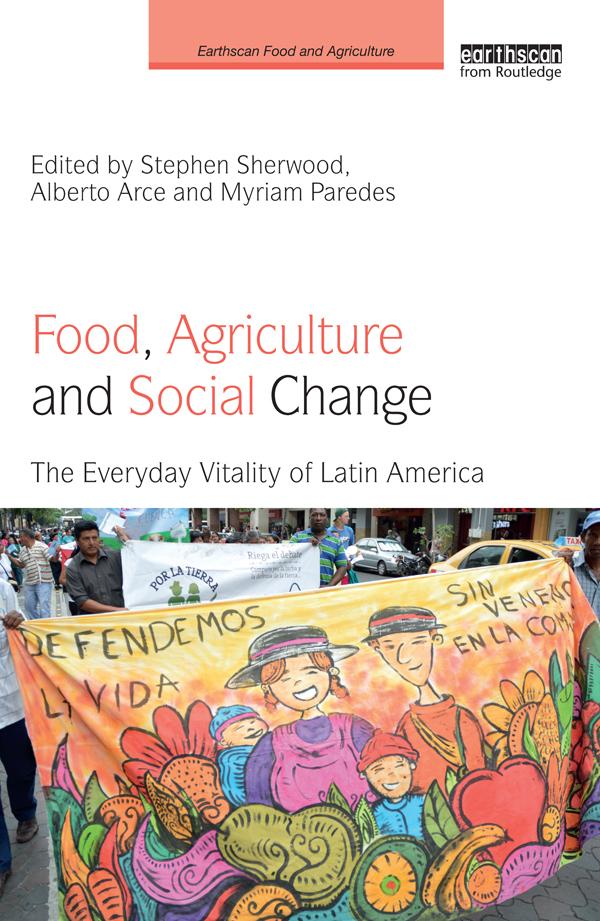
In recent years, food studies scholarship has tended to focus on a number of increasingly abstract, largely unquestioned concepts with regard to how capital, markets and states organize and operate. This has led to a gulf between public policy and people’s realities with food as experienced in homes and on the streets. Through grounded case studies in seven Latin American countries, this book explores how development and social change in food and agriculture are fundamentally experiential, contingent and unpredictable.
In viewing development in food as a socio-political-material experience, the authors find new objects, intersubjectivities and associations. These reveal a multiplicity of processes, effects and affects largely absent in current academic literature and public policy debates. In their attention to the contingency and creativity found in households, neighbourhoods and social networks, as well as at the borders of human–nonhuman experience, the book explores how people diversely meet their food needs and passions while confronting the region’s most pressing social, health and environmental concerns.
Betal nemt med kort, Klarna, Apple Pay eller Google Pay. Ikke tilfreds? Du har altid 14 dages fortrydelsesret. Læs mere i vores vilkår. Har du spørgsmål, så send os en mail på hello@memmo.org.
Memmo gør det nemmere at studere – uanset hvor du er i verden. Hos os samler du dine kursusbøger og smarte studieværktøjer ét sted: resuméer, quizzer, podcasts og flashcards. Og så er der Ted, din studieven, der svarer på alt, du undrer dig over. Over 50 000 studerende studerer allerede her – bygget til at hjælpe dig med at lære hurtigere og stresse mindre.