
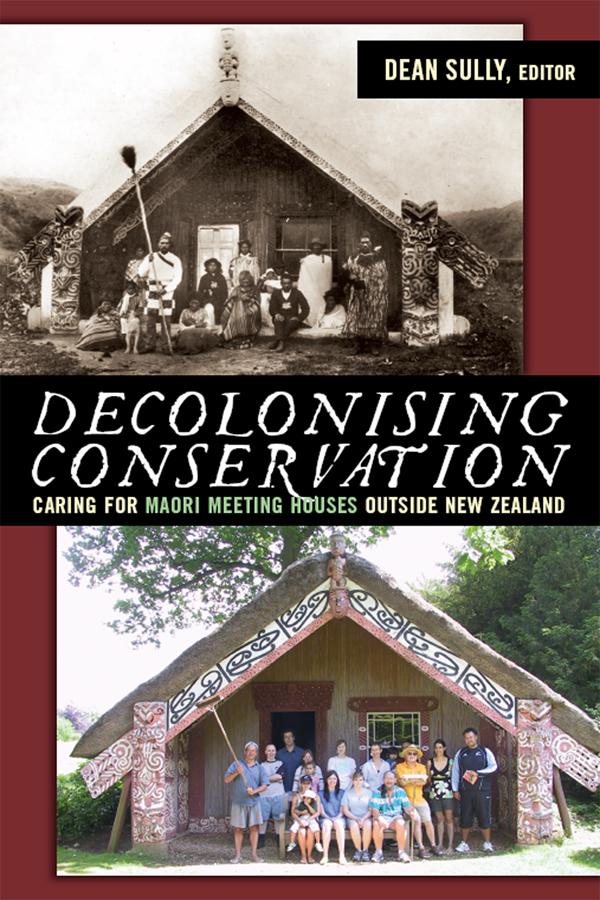
This book argues for an important shift in cultural heritage conservation, away from a focus on maintaining the physical fabric of material culture toward the impact that conservation work has on people’s lives. In doing so, it challenges the commodification of sacred objects and places by western conservation thought and attempts to decolonize conservation practice. To do so, the authors examine conservation activities at Maori marae—meeting houses—located in the US, Germany, and England and contrasts them with changes in marae conservation in New Zealand. A key case study is the Hinemihi meeting house, transported to England in the 1890s where it was treated as a curiosity by visitors to Clandon Park for over a century, and more recently as a focal point of cultural activity for UK Maori communities. Recent efforts to include various Maori stakeholder communities in the care of this sacred structure is a key example of community based conservation that can be replicated in heritage practice around the world.
Sider: 272
Kategori: Kultur-, Genus- & Postkoloniala studier
e-ISBN: 9781315430591
Forsendelsesvægt: 1.2 kg
Sendes inden for: 1-2 dage
Betal nemt med kort, Klarna, Apple Pay eller Google Pay. Ikke tilfreds? Du har altid 14 dages fortrydelsesret. Læs mere i vores vilkår. Har du spørgsmål, så send os en mail på hello@memmo.org.
Memmo gør det nemmere at studere – uanset hvor du er i verden. Hos os samler du dine kursusbøger og smarte studieværktøjer ét sted: resuméer, quizzer, podcasts og flashcards. Og så er der Ted, din studieven, der svarer på alt, du undrer dig over. Over 50 000 studerende studerer allerede her – bygget til at hjælpe dig med at lære hurtigere og stresse mindre.
Du kan måske også lide
Køb bogen0