
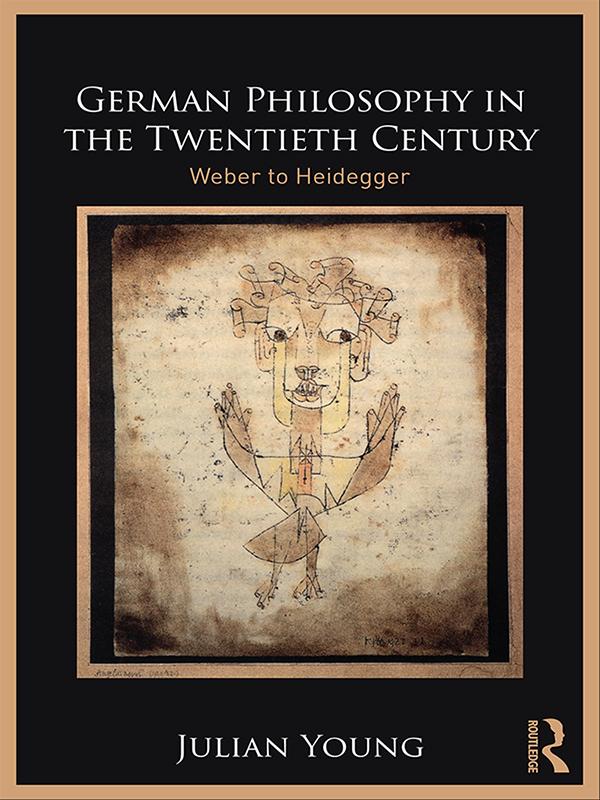
The course of German philosophy in the twentieth century is one of the most exciting, diverse and controversial periods in the history of human thought. It is widely studied and its legacy hotly contested.
In this outstanding introduction, Julian Young explains and assesses the two dominant traditions in modern German philosophy – critical theory and phenomenology – by examining the following key thinkers and topics:
- Max Weber’s setting the agenda for modern German philosophy: the ‘rationalization’ and ‘disenchantment’ of modernity resulting in ‘loss of freedom’ and ‘loss of meaning’
- Horkheimer and Adorno: rationalization and the ‘culture industry’
- Habermas’ defence of Enlightenment rationalization, the ‘unfinished project of modernity’
- Marcuse: a Freud-based vision of a repression-free utopia
- Husserl: overcoming the ‘crisis of humanity’ through phenomenology
- Early Heidegger’s existential phenomenology: ‘authenticity’ as loyalty to ‘heritage’
- Gadamer and ‘fusion of horizons’
- Arendt: the human condition
- Later Heidegger: the re-enchantment of reality.
German Philosophy in the Twentieth Century: Weber to Heidegger is essential reading for students of German philosophy, phenomenology and critical theory, and will also be of interest to students in related fields such as literature, religious studies, and political theory.
Betal nemt med kort, Klarna, Apple Pay eller Google Pay. Ikke tilfreds? Du har altid 14 dages fortrydelsesret. Læs mere i vores vilkår. Har du spørgsmål, så send os en mail på hello@memmo.org.
Memmo gør det nemmere at studere – uanset hvor du er i verden. Hos os samler du dine kursusbøger og smarte studieværktøjer ét sted: resuméer, quizzer, podcasts og flashcards. Og så er der Ted, din studieven, der svarer på alt, du undrer dig over. Over 50 000 studerende studerer allerede her – bygget til at hjælpe dig med at lære hurtigere og stresse mindre.